The cost of intelligence is falling up to 10x a year. Demand rises faster than the price falls, so what limits an enterprise is no longer what intelligence costs. It is what the enterprise spends to run what it builds, and that spend compounds with every system it puts into production.
Frontier capability that cost thirty dollars per million tokens in 2023 costs cents today at equivalent capability.
Jevons Paradox: as the unit cost of intelligence falls, enterprise AI demand accelerates.
When capability is cheap and demand is unlimited, execution efficiency decides which enterprises scale AI adoption.
Every enterprise lives in a market of cheap intelligence and unlimited ideas.
The ones that pull ahead build foundations that keep AI adoption efficient at scale.
Akka has one offering, the Akka Agentic AI Platform. The solutions that run on it each remove a specific cost. Any one of them can be used on its own, and all are delivered through the platform on one runtime, one evidence record, and one governance model.
| Solution | Cost removed | How | Measured |
|---|---|---|---|
| Akka SDK | Infrastructure | Agents, memory, orchestration, streaming, and endpoints run on shared compute inside one runtime. Actor-based concurrency and that shared model drop operating costs up to 90%. | Fox shrank its AI personalization engine from 150,000 cores to 22,000 after porting to Akka. |
| Akka Specify | Rework | Developers and non-developers write plain-language specifications, and every change is verified against them, so code never drifts from spec. Technical and knowledge debt stop accumulating. | Dojo put AI-based merchant onboarding into production in weeks, built by college graduates. |
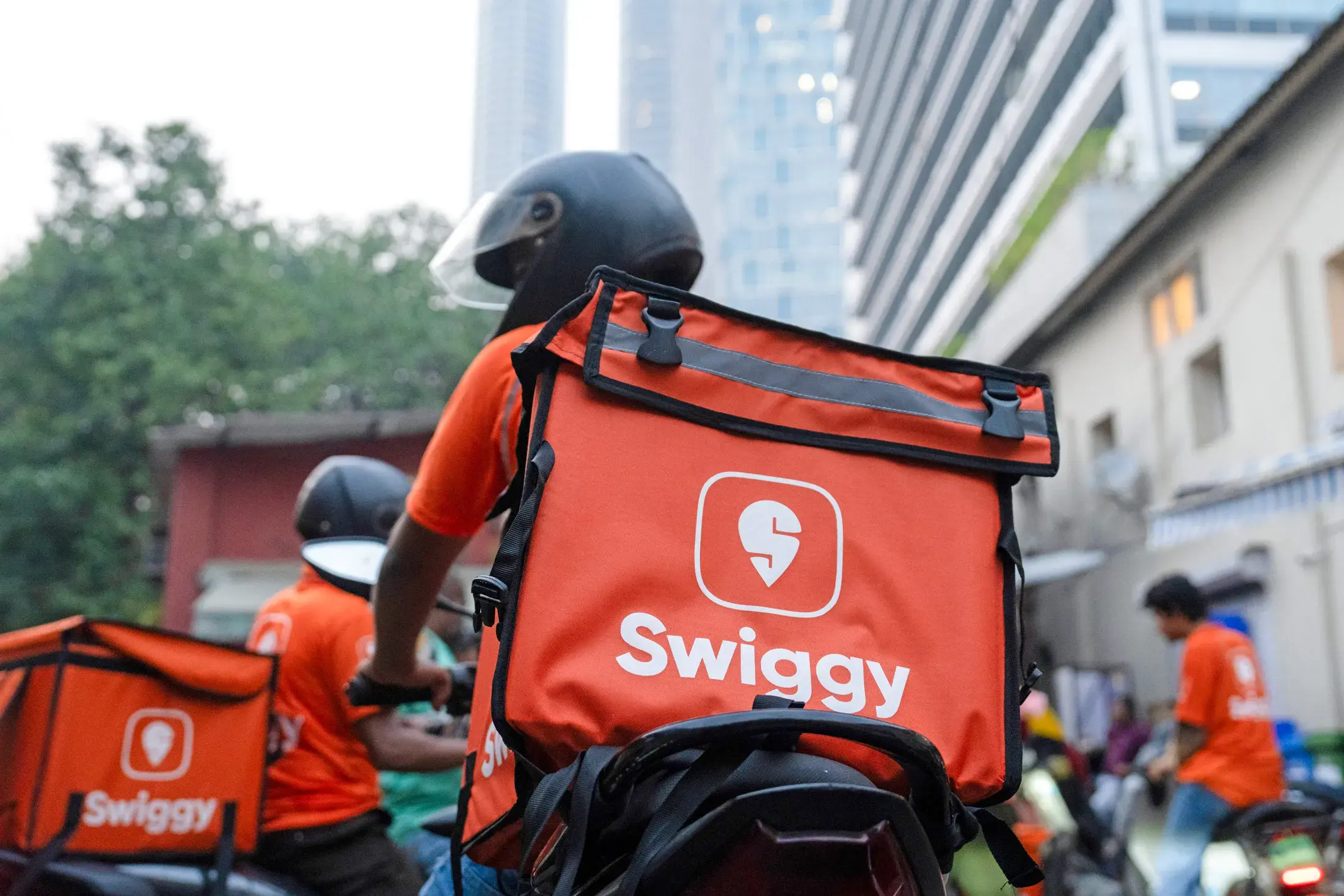
| Akka Optimize | Token spend | Akka routes each task to the best open-weight model, trains smaller ones on your own data, and promotes them once they hold their grade. You own the models. | Swiggy cut prediction latency from 144ms to 71ms at 22% fewer tokens. |
| Akka Verify | Governance effort | Risk teams define policies once. The runtime enforces them across every agent, against a corpus of 190 global AI regulations and 1,230 controls. | Manulife rolled Akka out to 2,000 developers in 6 countries under central risk control. |
Akka runs every part of an agentic system in one runtime, and that runtime guarantees resilience and scalability. Agents, memory, orchestration, streaming, endpoints, guardrails, evaluations, training, and inference are properties of the same system. Each one draws on the same compute, and each one is billed once.
Hyperscalers offer a comparable breadth of AI capability, delivered as separate services that you provision, connect, and operate. You configure failover, handle scaling, load-test, and harden the system before it can carry real traffic. You build the integration between those services and you keep it working.
All four savings above follow from that difference, and they hold as the deployed base grows.
A typical enterprise agentic deployment on a hyperscaler requires separately provisioned and separately metered services. Enterprise Agreements reduce the per-service rate. They do not change the architecture, so the bills still compound with scale.
Akka replaces that stack with shared compute. There are no separate memory charges, no streaming charges, and no observability charges, because the platform provides them. Scale-to-zero means idle capacity costs nothing. The result is an infrastructure cost reduction of up to 90%.
Cost per token prices consumption. A wrong answer consumes few tokens and still costs the business, because the work it failed to do gets done again downstream.
Akka measures cost per verified task: the total cost of producing an outcome that passed its evaluations. Optimize reads evaluated production traffic to find work a smaller model can take, then trains, proves, and promotes it. Quality is held to the evidence Verify already collects, on the same interaction record, so cost falls without behaviour drifting.
Because both run on one runtime, the trace an agent emitted is the same record used to grade it, to train against it, and to serve the result. There is nothing to export between an evaluation tool, a training service, and an inference endpoint, and no second and third bill for moving the data between them.
The loop that lowers cost runs on the same interaction record that governance runs on.
Real-time recommendations across a catalog of more than 300,000 titles, applying AI to live streams of viewing data.
City-scale order assignment, scoring every order-and-rider pairing inside a one-minute SLA.
A distributed communications and payments network, rebuilt on Akka after the previous architecture hit its ceiling.
A model-risk-management SaaS that automates validation for financial-institution customers.
Rework is the cost that does not appear on an invoice. It shows up as time to first production release, as the size of the team needed to get there, and as how often that team can ship afterwards.
A product-led revenue platform shipped by a small team with no infrastructure to provision, then grown to dozens of paying customers.
Integration and fintech systems for insurance, healthcare, and government clients, where 60 to 80% of each project used to be plumbing.
An AI platform for operating room intelligence, delivering live analysis to hospitals from concept to production.
Shipboard payments and booking, rebuilt from three backend systems and five codebases that deployed at midnight to avoid disruption.
Separately provisioned services, each sized with its own headroom and metered on its own unit. A typical hyperscaler deployment bills model inference per token, orchestration per step, memory per query plus storage, streaming per throughput unit, the API gateway per call, observability per GB ingested, content safety per call, and egress for the data moving between them.
Up to 90%. Orchestration, agents, memory, streaming, APIs, governance, and model economics run on the same infrastructure, so memory, streaming, and observability are not separate line items. Scale-to-zero removes the cost of idle capacity.
The total cost of producing an outcome that passed its evaluations. It counts only the runs that passed. A cheaper model that fails more often produces fewer passed runs per dollar.
Quality is held to the evaluations that already run in production. Akka Optimize reads evaluated traffic to identify work a smaller model can take, trains it on your own data, proves it against those same evaluations, and only then promotes it. A model that does not hold its grade is not promoted.
You do. Specialized models are tuned from an open-weight base on your proprietary data, inside your own environment.
Demand rises as the unit price falls. Every capability release multiplies the use cases an enterprise can adopt, so total consumption grows faster than the per-unit price declines. This is Jevons Paradox applied to intelligence.