Akka vs. Vercel AI SDK

A comparison for teams building agentic AI
June 2026
The Vercel AI SDK gives you outstanding developer experience for building and shipping AI features — but you own production. It is a TypeScript developer SDK with serverless hosting: no enterprise durable runtime, no active-active HA/DR with zero-byte RPO, no six-nines SLA on the running agent, and no embedded governance. Akka is the agentic systems platform that owns the running system end to end — and guarantees it.
99.99%
Vercel Enterprise SLA
99.9999%
Akka SLA
4ms
Akka State Reads
5B
Tokens / Sec Benchmark
DimensionVercel AI SDKAkka
What it isA TypeScript developer SDK for building AI apps and agents, with serverless hosting (AI Cloud / Fluid Compute)A full-stack agentic systems platform with an enterprise durable runtime
ScopeModel calls, tool loops, streaming, UI hooks, MCP — outstanding DX for building; you own productionOrchestration, agents, memory, streaming, APIs, observability, and governance on one runtime
LanguageTypeScript / JavaScript only (React, Next.js, Vue, Svelte, Node.js)Java / Scala; deploy on Akka cloud, hyperscaler VPC, own Kubernetes, on-prem, sovereign cloud
Availability SLA99.99% on Enterprise, commercially reasonable efforts, excludes Excused Downtime99.9999% — entire platform, backed by indemnities
HA / DRServerless redundancy; no published active-active SLA, RPO, or RTO commitmentActive-active HA/DR; sub-1-minute RTO; zero-byte RPO
Durable stateStateless serverless functions; durability via event-log replay into distributed storageDurable in-memory, 4ms reads / sub-10ms writes, replayable from its event journal
Governance / EU AI ActSecurity/privacy certifications; no AI-policy enforcement, classification, or sealed audit artifact in the SDKAspect-woven runtime enforcement + full pre-production governance
Cost modelConsumption-metered serverless compute (Active CPU) + provisioned memory, billed with loadShared compute; up to 90% lower infrastructure for the same workload
CertificationsSOC 2 Type II, ISO 27001:2022, PCI DSS, HIPAA, GDPR (access on request)19 standards (SOC 2 II + public SOC 3, ISO 27001/42001, EU AI Act, NIST AI RMF)

The Vercel AI SDK Is a Developer SDK with Hosting; Akka Is an Enterprise Platform

The Vercel AI SDK is the TypeScript toolkit for building AI-powered applications and agents — and it is excellent at that. It abstracts away the differences between model providers behind one clean API, and AI SDK 6 adds first-class agents, loop control, human-in-the-loop tool approval, full MCP support, and DevTools. Paired with Vercel's serverless hosting (AI Cloud and Fluid Compute), a team can build and ship an AI feature with remarkable speed.

That speed is real, and it is the right tool for building. The line is production ownership. The SDK is a library that runs inside functions you deploy; the durable runtime, the cross-region failover, the availability guarantee on the running agent, and the governance enforcement are not part of it. With the Vercel AI SDK you assemble and operate those concerns. With Akka they are the platform.

CapabilityVercel AI SDKAkka
Build AI features / agents in codeYes — best-in-class DXYes
Model abstraction, tool loops, streaming, MCPYesYes
Native durable runtime for the running agentServerless functions + bolt-on durabilityBuilt in
Active-active HA/DR (zero-byte RPO)Not publishedBuilt in
Six-nines availability SLA on the agent99.99% Enterprise99.9999%
Durable in-memory stateDistributed storage, replayedBuilt in, 4ms / sub-10ms
Embedded runtime governanceNot in the SDKInline, runtime-embedded
Pre-production governanceNot in the SDKClassification, sign-offs, sealed posture

Availability, Disaster Recovery, and Durable State

Vercel publishes a 99.99% availability SLA on its Enterprise plan, made on a commercially reasonable efforts basis and excluding Excused Downtime — outages caused by third-party vendors, the internet, your own software, or factors outside Vercel's reasonable control. Service credits are capped at 50% of the monthly fee, and the customer must file a claim with log files. There is no published active-active multi-region SLA, no zero-byte RPO, and no RTO commitment on the running agent.

MetricVercel AI SDKAkka
Availability SLA99.99% (Enterprise, commercially reasonable efforts)99.9999%
Allowed downtime / year~52 minutes~31 seconds
RTONot committedSub-1 minute
RPONot committedZero byte
SLA scopeHosting platform; Excused Downtime excludedThe entire running platform

State follows the same line. Vercel's compute is serverless — Fluid Compute functions are short-lived and reused, with a maximum duration of 800 seconds (1800s in beta); a function that exceeds it returns a 504 timeout. Durability for long-running agents comes from the Workflow DevKit, which records each step to an event log and replays it into isolated API routes, with production state in distributed storage. Akka holds state in durable sharded in-memory at 4ms reads and sub-10ms writes, replayable from its own event journal — no external store on the hot path.

Up to 90% Cheaper to Operate

AI systems built with Akka are up to 90% cheaper to operate than Python-based systems — a function of the infrastructure required to run the same agentic transaction volume, not list price. The drivers are actor concurrency (~10T tokens/core/year vs ~2T; ~80% less compute than Python frameworks), shared compute across orchestration, agents, memory, streaming, APIs, observability, and governance on one runtime, and micro-checkpointing that minimizes retries. Manulife reported up to 300% more concurrency and 30–50% faster processing after porting from Python.

Vercel's serverless model bills consumption: Active CPU while code executes, plus provisioned memory for running instances. Spend moves with load, and the meter covers the hosting compute — the agent runtime, memory, streaming, and governance you assemble around it carry their own cost. Akka runs all of it on one shared-compute runtime for a fixed annual fee finance can forecast.

The Language Boundary

The Vercel AI SDK is TypeScript / JavaScript only — React, Next.js, Vue, Svelte, Node.js. That is the right surface for the web tier and for building AI features quickly. It also means an enterprise standardizing on it commits its agentic systems to the JS/TS runtime.

Akka runs on the JVM (Java / Scala) and deploys anywhere — Akka cloud, hyperscaler VPC (AWS/Azure/GCP), the customer's own Kubernetes, on-prem, or sovereign cloud with country-isolated data and local SREs. Specs are portable across those targets, so the deployment model is a procurement choice, not a constraint.

Governance and the EU AI Act

Vercel holds strong security and privacy certifications — SOC 2 Type II, ISO 27001:2022, PCI DSS, HIPAA, GDPR, and more — covering the hosting platform. The AI SDK does not provide AI-governance enforcement: no inline policy enforcement against regulations, no decision explainability, no human pause or override of a running process as a runtime guarantee, no immutable interaction ledger, no pre-deployment classification, and no sealed audit artifact. Those obligations are owned by the customer.

The penalties are enforceable now

ViolationMaximum Fine
Prohibited AI practices (Art. 5)EUR 35M or 7% global turnover
High-risk obligations (Art. 9-15)EUR 15M or 3% global turnover

High-risk AI carries a 10-year logging-retention obligation (Art. 72).

How Akka governs

At the runtime: inline guardrails, policies, LLMs-as-a-judge, and sanitizers; hash-chained immutable evidence; HITL/HOTL control; classification against 189 regulations and 962 controls before a system ships; multi-persona sign-offs; a sealed Governance Posture Package; and Akka Verify proving conformance from the running system. Governance a Vercel AI SDK team would bolt on, Akka enforces inline.

Two Lifecycles, One Certified System

Building with the Vercel AI SDK means TypeScript engineers writing agent code; there is no built-in path for a product manager, domain expert, or risk officer to author and version a governance contract independently. Akka runs two independent lifecycles on one platform via Akka Specify:

Build lifecycle
Functional contract
"Rank incoming ER patients by acuity and route the top three to a clinician."
Product · developers · ML engineers · domain experts
v1.4 · versioned · tested
Govern lifecycle
Safeguard contract
"Block prohibited practices under EU AI Act Article 5; notify regulators within 24h of any incident."
Risk · security · compliance
v2.1 · versioned & tested independent of the build
Akka Specify
AI-assisted authoring
generates · tests · runs
One certified AI service
Built, governed, and running
  • Agents, tools, orchestration, memory, APIs, streaming, UI
  • Guardrails, sanitizers, HITL/HOTL, evaluations, halts
  • Interaction, evidence, and causal logging
Akka Verify ↻ validates the running system against both specs and fine-tunes the AI from production data.

The build lifecycle and the governance lifecycle are versioned and tested independently, by different audiences — a workflow the Vercel AI SDK has no equivalent for.

Real-Time Streaming at Petabyte Scale

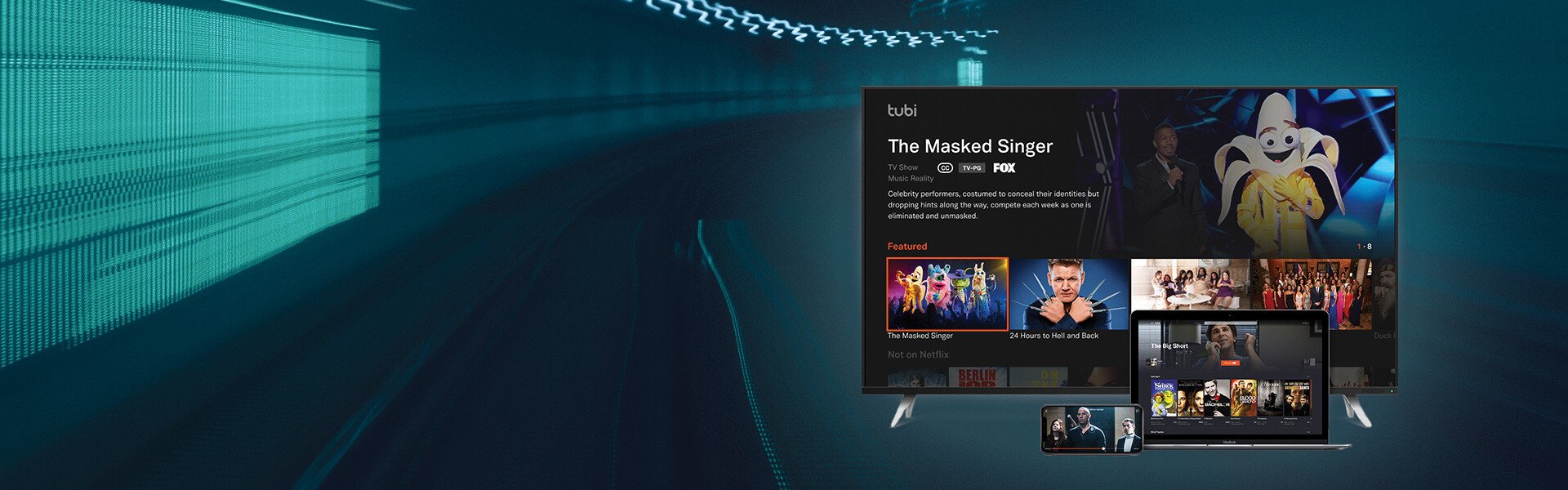
The Vercel AI SDK streams model tokens to the client, which is exactly what an interactive AI feature needs. It is not a streaming data engine. Akka's streaming is built into the runtime — continuous, backpressured, petabyte-scale, in-memory, with no external broker — powering both agent feedback loops and high-throughput data processing (the engine behind Tubi's real-time hyper-personalization at 5 billion tokens per second).

For the Buyer: Risk, Compliance, and Accountability

Buyer concernVercel AI SDKAkka
Certifications & auditsSOC 2 Type II, ISO 27001:2022, PCI DSS, HIPAA, GDPR (access on request)19 standards — SOC 2 II + public SOC 3, ISO 27001/42001, HIPAA, PCI DSS, GDPR, NIS2, DORA, EU AI Act, NIST AI RMF — plus annual pen tests, SBOMs, 40+ policies (trust.akka.io)
Scope of accountabilityThe hosting platform; you build, integrate, and operate the agent runtime, memory, and governanceOne platform, one SLA, 24/7 SRE — Akka owns the running system
Risk transferStandard cloud terms; SLA credits capped at 50% of monthly feeAvailability and data-integrity guarantees backed by contractual indemnities
Track record & funding modelVenture-funded: $9.3B Series F (Sept 2025), ~$863M raised; ~$340M ARR run-rate (Mar 2026); profitability not disclosedProfitable and self-funding; 18 years and 100,000+ deployments (52 banks); Dell Technologies Capital is largest shareholder, a customer, and an AI partner
Budget predictabilityConsumption-metered serverless compute that scales with loadFixed annual fee finance can forecast

Vercel is well-capitalized and growing fast, and its developer experience is genuinely best-in-class. The decision is scope and accountability: the Vercel AI SDK gives developers an outstanding way to build and ship AI features; Akka gives you the enterprise platform that owns the running system — durable runtime, six-nines availability, active-active HA/DR, and embedded governance.

Customers Running Agentic and Real-Time Systems on Akka

Manulife
2,000
developers across 100 projects on one governed platform
Tubi
5B tok/s
real-time hyper-personalization engine
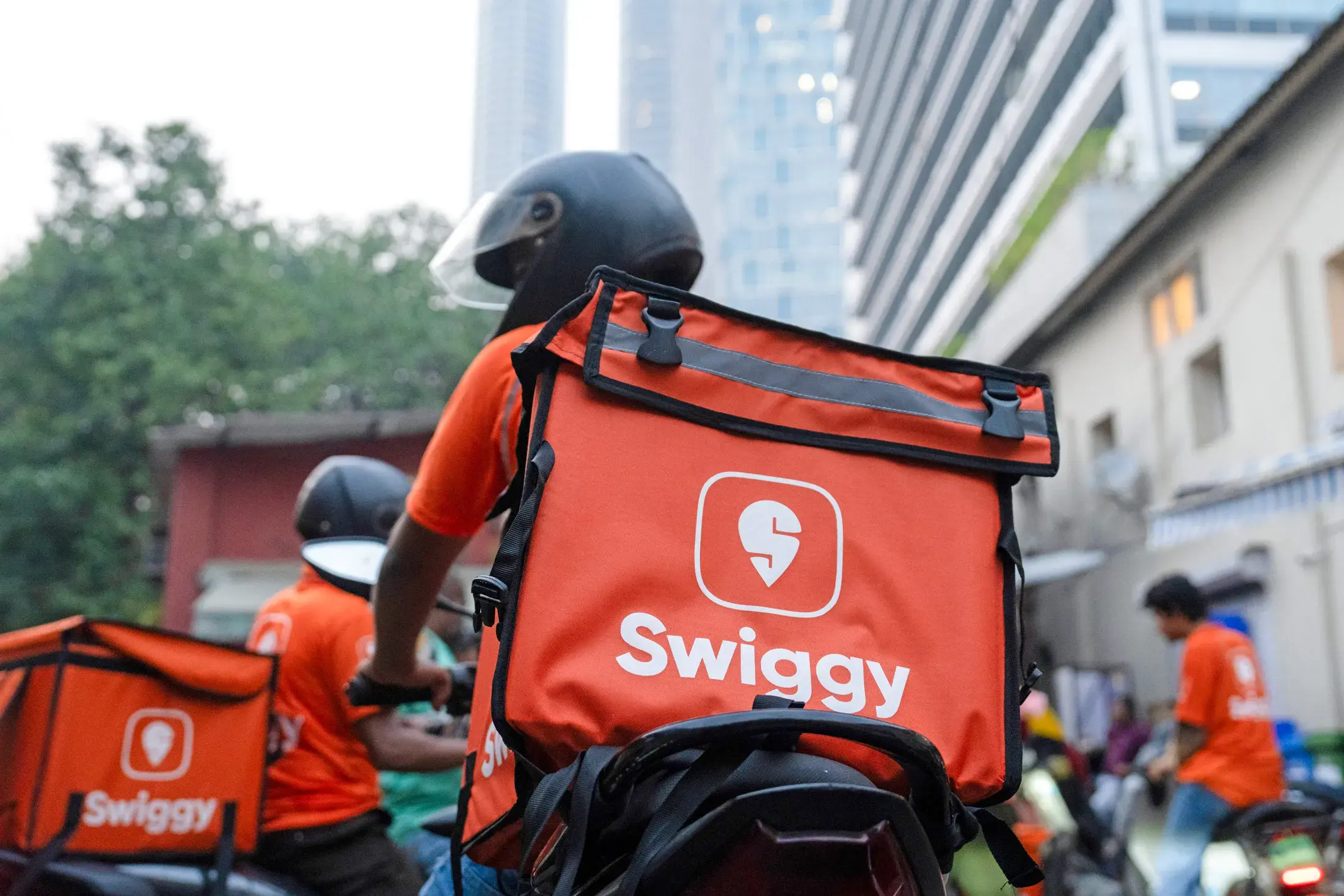
Swiggy
71ms
order-assignment AI, ~50% latency reduction
John Deere
1,000+
tractor sensors turned into real-time insight
Verizon
750%
order-processing capacity gain; 6s → 2.4s response

Common Questions

We already use the Vercel AI SDK and love the developer experience. Why add Akka?
The Vercel AI SDK is an excellent way to build and ship AI features — keep using it for that. The question is what owns production: the durable runtime, cross-region failover, the availability guarantee on the running agent, and governance enforcement. Those are not in the SDK; you operate them yourself. Akka is the platform that owns the running system, with a 99.9999% SLA, active-active HA/DR, durable in-memory state, and embedded governance.
Doesn't Vercel's DurableAgent and Workflow DevKit give me a durable runtime?
The Workflow DevKit adds durability to TypeScript functions by recording each step to an event log and replaying it into isolated serverless routes, with production state in distributed storage. That makes individual workflows crash-safe. It is not an active-active HA/DR runtime with a zero-byte RPO and a six-nines SLA on the running system. Akka provides durable sharded in-memory state at 4ms/sub-10ms and a contractual 99.9999% availability guarantee.
Can we add governance on top of the Vercel AI SDK?
You can add logging and evaluation libraries, but the EU AI Act expects enforcement inline to the runtime: immutable records witnessed as they happen, human override on running processes, and authorization captured at execution time. Bolt-on tools cannot gate a deployment or classify a system before it ships. Akka embeds inline guardrails, hash-chained evidence, and pre-deployment classification against 189 regulations and 962 controls, and proves conformance with Akka Verify.
Isn't the Vercel AI SDK cheaper because it's open source?
The SDK is free and open source, and that lowers the cost of building. Production cost is the infrastructure to run the workload: Vercel bills consumption-metered serverless compute that scales with load, and the agent runtime, memory, streaming, and governance around it carry their own cost. Akka's shared-compute model is up to 90% cheaper to operate for the same agentic transaction volume, on a fixed annual fee.

Sources

Vercel AI SDK (TypeScript scope): ai-sdk.dev/docs/introduction, github.com/vercel/ai — "the TypeScript toolkit"; React, Next.js, Vue, Svelte, Node.js; open-source library, runs on any host
AI SDK 6 (agents, loop control, MCP, DevTools, tool approval): vercel.com/blog/ai-sdk-6, ai-sdk.dev/docs/agents/overview, /agents/loop-control
Vercel AI Cloud / Fluid Compute: vercel.com/blog/the-ai-cloud-a-unified-platform-for-ai-workloads, vercel.com/docs/fluid-compute, /functions/limitations — serverless; 800s max (1800s beta); 504 timeout
Workflow DevKit / DurableAgent: vercel.com/blog/introducing-workflow, github.com/vercel/workflow — event-log replay into isolated API routes; distributed storage in production
Vercel Enterprise SLA: vercel.com/legal/sla, vercel.com/enterprise — 99.99% commercially reasonable efforts; Excused Downtime excluded; credits capped at 50% of monthly fee
Vercel certifications: vercel.com/docs/security/compliance, security.vercel.com — SOC 2 Type II, ISO 27001:2022, PCI DSS, HIPAA, GDPR; access on request
Vercel funding & revenue: sacra.com/c/vercel, businesswire (Series F at $9.3B, Sept 2025), techcrunch.com (Apr 2026) — ~$863M raised; ~$340M ARR run-rate; profitability not disclosed
Akka trust center: trust.akka.io — 19 compliance standards; SOC 2 II + public SOC 3; annual pen tests, SBOMs, 40+ policies
Akka performance: akka.io/blog/go-slow-to-go-fast — Manulife up to 300% more concurrency, 30–50% faster; ~10T vs ~2T tokens/core; ~80% less compute than Python
Akka platform: 99.9999% availability, active-active HA/DR, sub-1 min RTO, zero byte RPO (contractual indemnities); durable in-memory 4ms / sub-10ms; 189 regulations / 962 controls (574 with a financial penalty); 100,000+ deployments / 18 years; profitable; Dell Technologies Capital