Akka vs. Salesforce Agentforce

A comparison for teams building agentic AI
June 2026
Agentforce is a SaaS application-layer agent bound to the Salesforce platform and data model — excellent inside Salesforce, but not a general-purpose agentic runtime. It is priced by consumption (per-action Flex Credits or per-conversation), its agents are grounded in Salesforce CRM metadata and Data Cloud, and its governance is scoped to the Salesforce ecosystem through the Einstein Trust Layer — not to the EU AI Act broadly. Akka is a full-stack agentic systems platform that runs any cross-system workload, on a fixed annual fee, with EU AI Act enforcement embedded in the runtime.
No SLA
Agentforce Contractual Uptime
99.9999%
Akka SLA
Up to 90%
Cheaper to Operate on Akka
962
Controls Akka Governs To
DimensionSalesforce AgentforceAkka
What it isA SaaS application-layer agent platform inside the Salesforce ecosystemA full-stack agentic systems platform
ScopeAgents grounded in Salesforce CRM metadata and Data Cloud; external systems reached via Flow / API calloutsGeneral-purpose runtime for any agentic workload, across any system
Platform dependencyAdd-on to Salesforce licenses; Data Cloud is a technical prerequisiteNone — Akka cloud, any hyperscaler VPC, your Kubernetes, on-prem, sovereign cloud
Availability SLANo contractual uptime SLA; standard MSA "commercially reasonable efforts," ~99.9% in practice99.9999% — entire platform, backed by indemnities
RTO / RPONot published for the agent layerSub-1-minute RTO; zero-byte RPO; active-active HA/DR
Cost modelConsumption — Flex Credits (20 credits / $0.10 per action) or $2 per conversationShared compute; up to 90% lower infrastructure for the same workload; fixed annual fee
Governance / EU AI ActEinstein Trust Layer — toxicity/bias detection, masking, audit log, scoped to SalesforceAspect-woven runtime enforcement + full pre-production governance (189 regulations / 962 controls)
Build audienceSalesforce admins / developers in Agentforce Builder & Agent ScriptTwo independent lifecycles — build (PM/dev/ML/domain) and govern (risk/security/compliance)
CertificationsSalesforce trust / compliance program19 standards (SOC 2 II + public SOC 3, ISO 27001/42001, HIPAA, PCI DSS, GDPR, NIS2, DORA, EU AI Act, NIST AI RMF)

A SaaS Application-Layer Agent vs. a General-Purpose Runtime

Agentforce is an application-layer agent platform built into Salesforce. Its agents are authored in Agentforce Builder, compiled by Agent Script into Salesforce metadata, and executed by the Atlas Reasoning Engine — grounded in Salesforce CRM objects and Data Cloud. That is what makes it excellent inside Salesforce, and what bounds it there. Salesforce describes a four-layer stack: a Data layer (Data Cloud), an Application layer (CRM objects and business logic), an AI/Model layer (Einstein models, the Atlas Reasoning Engine, and third-party LLMs), and an Agent layer (salesforce.com). Agentforce reaches non-Salesforce systems through Flow and API callouts, but orchestration, reasoning, and state live inside Salesforce — "the goal is to make data available in Salesforce" (salesforceben.com).

Akka is not an application; it is the runtime an agentic system runs on — native agents, durable in-memory state, real-time streaming, an API layer, orchestration, observability, and governance as one platform, for any workload, independent of any single SaaS data model.

CapabilityAgentforceAkka
Agents inside the Salesforce ecosystemNative, deeply integratedRuns alongside via APIs
General-purpose runtime for any agentic workloadBounded to Salesforce; external systems via Flow/APIBuilt in — any system
State / reasoning locationInside Salesforce (CRM metadata, Data Cloud)Durable in-memory, vendor-neutral, 4ms / sub-10ms
Platform prerequisiteSalesforce license + Data CloudNone
Deploy on your own infrastructureNo — Salesforce-hosted SaaSAkka cloud, hyperscaler VPC, Kubernetes, on-prem, sovereign

Availability and Disaster Recovery

Agentforce does not publish a contractual availability SLA for the agent layer. Salesforce's standard Master Subscription Agreement commits to "commercially reasonable efforts" to make services available 24/7, not a numeric uptime guarantee; Salesforce reports roughly 99.9% uptime in practice but does not contractually commit to it, and the standard agreement provides no automatic service credits for downtime (scnsoft.com, redresscompliance.com).

MetricAgentforceAkka
Contractual availability SLANone published; "commercially reasonable efforts"99.9999%
Uptime in practice~99.9% reported, not contractually committed99.9999%, contractual
Service creditsNone under standard MSABacked by indemnities
RTO / RPONot published for the agent layerSub-1-minute RTO / zero-byte RPO
SLA scopeThe entire platform

Akka owns the SLA across the entire platform, with active-active HA/DR across regions and 24/7 SRE.

Up to 90% Cheaper to Operate

AI systems built with Akka are up to 90% cheaper to operate than Python-based systems — a function of the infrastructure required for the same agentic transaction volume, not list price. The drivers are actor concurrency (~10 trillion tokens per core per year vs ~2 trillion; ~80% less compute than Python frameworks), shared compute, and micro-checkpointing. Manulife reported up to 300% more concurrency and 30–50% faster processing after porting from Python (akka.io/blog/go-slow-to-go-fast).

Agentforce is priced by consumption. Under Flex Credits a standard action costs 20 credits — about $0.10 at roughly $500 per 100,000 credits; an alternative Conversations model bills $2 per conversation, and the two cannot coexist in one org (jitendrazaa.com). The meter moves with usage. Akka runs everything on one shared-compute runtime for a fixed annual fee finance can forecast.

Real-Time Streaming at Petabyte Scale

Akka's streaming is built into the runtime — continuous, backpressured, petabyte-scale, in-memory, with no external broker — powering both agent feedback loops and high-throughput data processing (the engine behind Tubi's real-time hyper-personalization at 5 billion tokens per second).

Agentforce, as a SaaS application-layer product, has no comparable general-purpose streaming runtime; data movement runs through Salesforce platform services and Data Cloud, inside the Salesforce ecosystem.

Governance: Salesforce-Scoped vs. the EU AI Act Broadly

Agentforce governs through the Einstein Trust Layer: toxicity and bias detection, prompt/response masking, a zero-retention LLM gateway, and an audit trail logged to Data Cloud (salesforce.com/eu). It is real, and it is scoped to the Salesforce ecosystem and the data flowing through it. It is not a broad EU AI Act conformance program: it does not perform pre-deployment high-risk classification, gate a deployment before it ships, capture multi-persona regulatory sign-offs, or produce a sealed, portable audit artifact for systems outside Salesforce.

The penalties are enforceable now

ViolationMaximum Fine
Prohibited AI practices (Art. 5)EUR 35M or 7% global turnover
High-risk obligations (Art. 9-15)EUR 15M or 3% global turnover

High-risk AI carries a 10-year logging-retention obligation (Art. 72); the penalties apply to the whole AI system, not only the part inside Salesforce.

How Akka governs

At the runtime: inline guardrails, policies, LLMs-as-a-judge, and sanitizers; hash-chained immutable evidence; HITL/HOTL control; atomic PII scrub-with-explain; pre-deployment classification against 189 regulations and 962 controls (574 carrying a financial penalty); multi-persona sign-offs; a sealed Governance Posture Package; and Akka Verify proving conformance from the running system — for any workload, not only the part inside a single SaaS application.

Two Lifecycles, One Certified System

Building on Agentforce means Salesforce admins and developers authoring agents in Agentforce Builder and Agent Script; there is no co-equal, independently versioned governance lifecycle owned by risk and compliance. Akka runs two independent lifecycles on one platform via Akka Specify:

Build lifecycle
Functional contract
"Rank incoming ER patients by acuity and route the top three to a clinician."
Product · developers · ML engineers · domain experts
v1.4 · versioned · tested
Govern lifecycle
Safeguard contract
"Block prohibited practices under EU AI Act Article 5; notify regulators within 24h of any incident."
Risk · security · compliance
v2.1 · versioned & tested independent of the build
Akka Specify
AI-assisted authoring
generates · tests · runs
One certified AI service
Built, governed, and running
  • Agents, tools, orchestration, memory, APIs, streaming, UI
  • Guardrails, sanitizers, HITL/HOTL, evaluations, halts
  • Interaction, evidence, and causal logging
Akka Verify ↻ validates the running system against both specs and fine-tunes the AI from production data.

The build lifecycle and the governance lifecycle are versioned and tested independently, by different audiences — a workflow Agentforce has no equivalent for.

For the Buyer: Product Maturity, Lock-In, and Accountability

Salesforce the company is durable; the question is the Agentforce product. Agentforce 360 reached general availability on February 23, 2026, in the Spring '26 release, introducing Agentforce Builder, Agent Script, Agentforce Voice, and Intelligent Context (ciodive.com). The product is young and moving fast — the authoring model and the pricing model are both recent. Standardizing on it means accepting that maturity curve and the platform lock-in below.

Buyer concernAgentforceAkka
Product maturityAgentforce 360 GA Feb 2026; new authoring model (Agent Script) and pricing model recently introduced18 years, 100,000+ production deployments, 52 banks
Platform lock-inAdd-on to Salesforce licenses; Data Cloud a technical prerequisite; agents bound to the Salesforce data modelNo platform dependency; portable specs; deploy anywhere incl. sovereign cloud
Workload scopeExcellent inside Salesforce; external systems via Flow/APIAny agentic workload across any system
Availability accountabilityNo contractual SLA; standard MSA "commercially reasonable efforts"One platform, one SLA, 24/7 SRE — Akka owns the running system
Certifications & auditsSalesforce trust / compliance program19 standards — SOC 2 II + public SOC 3, ISO 27001/42001, HIPAA, PCI DSS, GDPR, NIS2, DORA, EU AI Act, NIST AI RMF — plus annual pen tests, SBOMs, 40+ policies (trust.akka.io)
Budget predictabilityConsumption metering that scales with usageFixed annual fee finance can forecast

The decision is scope and accountability: Agentforce is the right agent for work that lives inside Salesforce; Akka is the runtime for agentic systems that must span systems, carry a contractual SLA, govern to the EU AI Act broadly, and run on infrastructure you choose.

Customers Running Agentic and Real-Time Systems on Akka

Manulife
2,000
developers across 100 projects on one governed platform
Tubi
5B tok/s
real-time hyper-personalization engine
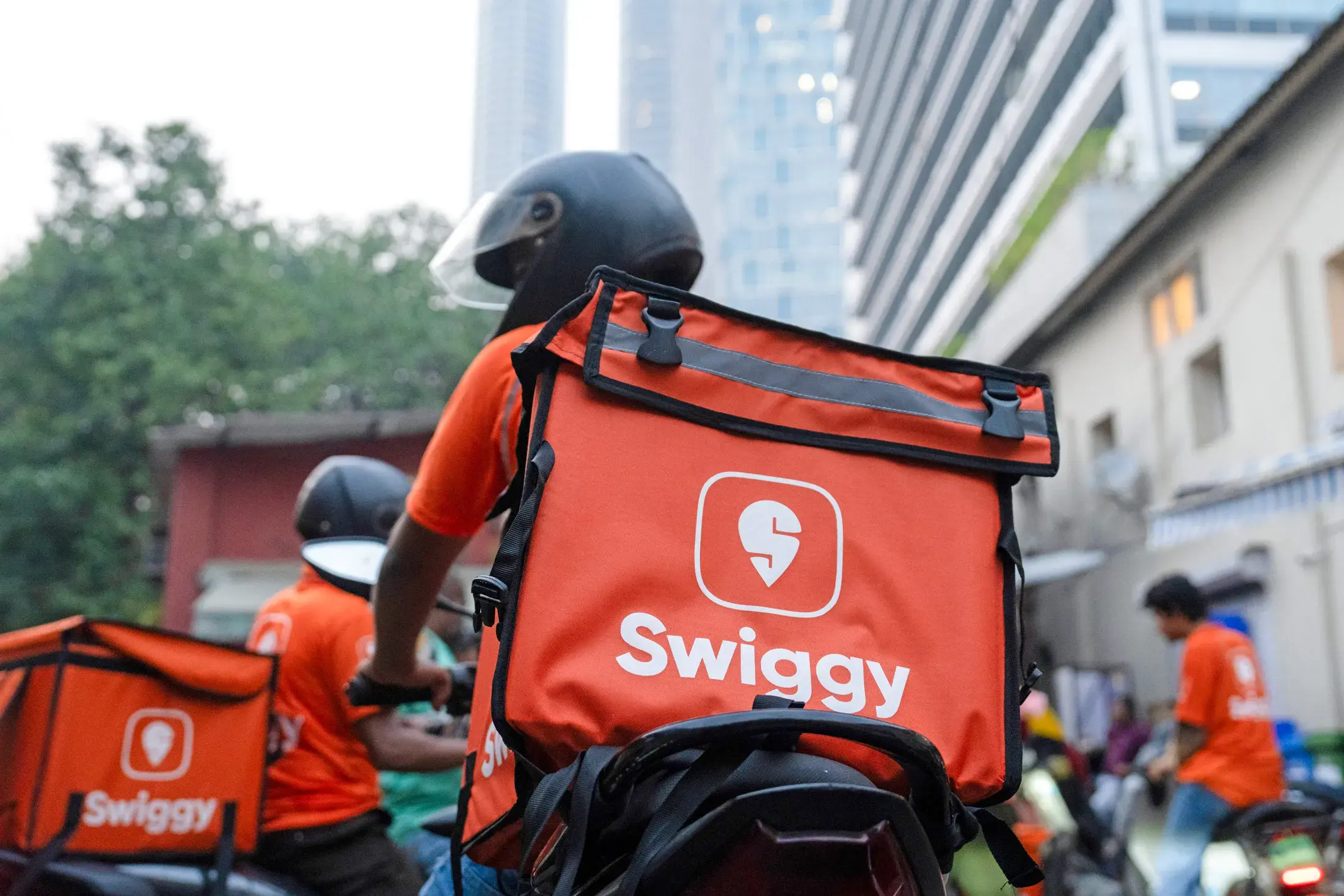
Swiggy
71ms
order-assignment AI, ~50% latency reduction
John Deere
1,000+
tractor sensors turned into real-time insight
Verizon
750%
order-processing capacity gain; 6s → 2.4s response

Common Questions

We already run Salesforce. Why add Akka?
Agentforce is excellent for agents that operate inside Salesforce, grounded in your CRM data. If you are building agentic systems that span multiple systems of record, need a contractual availability SLA, or must govern to the EU AI Act across the whole system, those are runtime concerns Agentforce does not cover. Akka runs alongside Salesforce and provides the general-purpose runtime.
Doesn't Agentforce already handle the EU AI Act with the Einstein Trust Layer?
The Einstein Trust Layer provides real safeguards — toxicity and bias detection, masking, a zero-retention gateway, and an audit trail — scoped to the Salesforce ecosystem. The EU AI Act applies to the entire AI system and expects pre-deployment high-risk classification, deployment gating, multi-persona sign-offs, immutable records, and a portable conformance artifact. Akka embeds these inline and covers pre-deployment governance against 189 regulations and 962 controls.
Is Agentforce cheaper because it's part of our Salesforce contract?
Agentforce is a consumption add-on: Flex Credits at roughly $0.10 per action (20 credits), or $2 per conversation, on top of the required Salesforce platform and Data Cloud licenses. The meter scales with usage. Akka's shared-compute runtime is up to 90% cheaper to operate for the same agentic transaction volume, on a fixed annual fee.
Can Agentforce run our agents outside Salesforce?
Agentforce can call external systems through Flow and API callouts, but the reasoning, orchestration, and state live inside Salesforce, and Data Cloud is a technical prerequisite. For agentic workloads whose center of gravity is outside Salesforce — or that must be portable across clouds and on-prem — Akka provides a vendor-neutral runtime with no platform dependency.

Sources

Agentforce pricing: g2.com/products/salesforce-agentforce/pricing; jitendrazaa.com — Flex Credits ~$500/100k credits, standard action 20 credits ($0.10), Conversations $2/conversation, models cannot coexist in one org (2026)
Agentforce architecture: salesforce.com/agentforce/what-is-a-reasoning-engine/atlas; developer.salesforce.com — Atlas Reasoning Engine (graph-based), Agent Script compiled into Salesforce metadata; four-layer stack (Data Cloud / Application / AI-Model / Agent)
Agentforce scope / lock-in: salesforceben.com/how-does-salesforces-agentforce-work; titandxp.com; redresscompliance.com — add-on to Salesforce licenses, Data Cloud technical prerequisite, external systems via Flow/API
Agentforce 360 GA: ciodive.com; salesforce.com/agentforce/what-is-new — GA Feb 23, 2026 (Spring '26): Agentforce Builder, Agent Script, Agentforce Voice, Intelligent Context
Salesforce SLA: scnsoft.com/blog/salesforce-downtime; redresscompliance.com — standard MSA "commercially reasonable efforts," ~99.9% in practice, no contractual uptime commitment, no automatic credits
Einstein Trust Layer: salesforce.com/eu/artificial-intelligence/trusted-ai; getgenerative.ai; gettectonic.com — toxicity/bias detection, masking, zero-retention LLM gateway, audit trail logged to Data Cloud; scoped to the Salesforce ecosystem
Akka performance: akka.io/blog/go-slow-to-go-fast — Manulife up to 300% more concurrency, 30–50% faster; ~10T vs ~2T tokens/core; ~80% less compute than Python
Akka platform: 99.9999% availability, active-active HA/DR, sub-1 min RTO, zero byte RPO (contractual indemnities); 189 regulations / 962 controls / 574 with a financial penalty; 100,000+ deployments / 18 years; profitable; Dell Technologies Capital
Akka trust center: trust.akka.io — 19 compliance standards; SOC 2 II + public SOC 3; annual pen tests, SBOMs, 40+ policies