| Dimension | PydanticAI | Akka |
|---|---|---|
| What it is | A typed Python agent framework (library) | A full-stack agentic systems platform |
| Scope | Agent construction, structured output, tools, MCP, graph; durability, HA/DR, governance, and operations are the customer's | Orchestration, agents, memory, streaming, APIs, observability, and governance on one runtime |
| Durable execution | None native — wrapped around external engines (Temporal, DBOS, Prefect, Restate) | Built into the runtime; event-sourced, replayable |
| Availability SLA | None on the framework; SLA only on Logfire Enterprise observability | 99.9999% — entire platform, backed by indemnities |
| RTO / RPO | Owned by the customer's chosen infrastructure | Sub-1-minute RTO; zero-byte RPO |
| Memory / state | Process memory; durability via the external engine's database | Durable in-memory, 4ms reads / sub-10ms writes |
| Governance / EU AI Act | Observability and evals via Logfire (after-the-fact); no inline enforcement or classification | Aspect-woven runtime enforcement + full pre-production governance |
| Real-time streaming | Not provided; sourced separately | Built in, backpressured, petabyte-scale, no external broker |
| Cost model | Python infrastructure footprint you provision and operate | Shared compute; up to 90% lower infrastructure for the same workload |
| Certifications | SOC 2 Type II, HIPAA, GDPR (Logfire) | 19 standards (SOC 2 II + public SOC 3, ISO 27001/42001, HIPAA, PCI DSS, GDPR, NIS2, DORA, EU AI Act, NIST AI RMF) |
PydanticAI is a typed Python agent framework from the team behind Pydantic. Its design point is developer experience: model-agnostic agents, structured and validated outputs, dependency injection, MCP support, and graph-based multi-agent workflows, all checked by your type checker and IDE. For teams building agents in Python who want errors caught at write-time, that DX is genuinely clean. A framework defines how you write code; a platform runs it and guarantees it. The durable runtime, high availability, disaster recovery, streaming, the API tier, embedded governance, and the operational SLA are not in the framework — you source, integrate, and operate them, and own every failure across the seams.
| Capability | PydanticAI | Akka |
|---|---|---|
| Typed agent construction (tools, structured output, MCP, graph) | Yes — clean, type-safe | Yes |
| Durable runtime | Delegated to external engines | Built in |
| High availability / disaster recovery | Customer-owned | Built in, active-active |
| Durable memory | Customer-owned (external engine's DB) | Built in, 4ms / sub-10ms |
| Real-time streaming | Not provided | Built in, backpressured, petabyte-scale |
| HTTP / gRPC API layer | Not provided | Built in |
| Governance / policy enforcement | Observe and evaluate (Logfire) | Inline, runtime-embedded |
| Operational SLA | None on the framework | 99.9999%, entire platform |
PydanticAI publishes no availability SLA, because a framework does not run anything — availability is a property of the infrastructure the customer builds around it. For durability, PydanticAI leans on external durable-execution engines: it ships co-maintained integrations with Temporal, DBOS, Prefect, and Restate, each of which checkpoints or replays state in its own datastore. The framework documents this explicitly; durability is delegated, not native. Reliability, recovery, and the SLA for the running system are owned and operated by the customer and their chosen engines. Akka delivers durability and availability as runtime properties: state is event-sourced and replayable from the journal, recovery is automatic, and the platform carries a contractual six-nines SLA.
| Metric | PydanticAI | Akka |
|---|---|---|
| Availability SLA | None on the framework; SLA only on Logfire Enterprise | 99.9999% — entire platform |
| Allowed downtime / year | Whatever the assembled stack delivers | ~31 seconds |
| RTO | Owned by the customer's chosen engine | Sub-1 minute |
| RPO | Owned by the customer's chosen engine | Zero byte |
| Durable execution | Delegated to Temporal / DBOS / Prefect / Restate | Native, in the runtime |
| SLA scope | None | The entire platform |
AI systems built with Akka are up to 90% cheaper to operate than Python-based systems — a function of the infrastructure required for the same agentic transaction volume, not list price. A PydanticAI deployment carries the Python infrastructure footprint, plus the separate datastore and operations of whichever durable-execution engine provides recovery, plus the memory, streaming, API, observability, and governance tiers run alongside it.
Akka runs all of it on one shared-compute runtime. The efficiency comes from actor concurrency (~10T tokens/core/year vs ~2T; ~80% less compute than Python frameworks; Manulife: up to 300% more concurrency, 30–50% faster processing after porting from Python), shared compute, and micro-checkpointing. The spend is predictable — a fixed annual fee, not a footprint that scales with load.
PydanticAI reached V1 in September 2025; the current stable release is 1.107.0 (June 2026), marked Production/Stable, with V2 in beta. The framework is young but real. Pydantic the company is venture-funded — a $12.5M Series A led by Sequoia (Oct 2024), ~$17.2M total — and monetizes through Logfire.
Akka is profitable and self-funding, with 18 years, 100,000+ production deployments, and 52 banks behind it. Dell Technologies Capital is the largest shareholder, a customer, and an AI partner — so the platform you standardize on does not depend on a venture timeline.
PydanticAI's governance story is observability. Through Pydantic Logfire — the team's commercial product — you get tracing, evaluations, and agent monitoring, with SOC 2 Type II, HIPAA, and GDPR for the observability service and an EU data region. That is real, and it matters for debugging and quality. It is observe-and-evaluate, applied to logs after execution: it does not enforce policy inline, pause or override a running process, classify a system before it ships, produce an immutable hash-chained interaction ledger, or seal an audit artifact. Those obligations remain the customer's.
| Violation | Maximum Fine |
|---|---|
| Prohibited AI practices (Art. 5) | EUR 35M or 7% global turnover |
| High-risk obligations (Art. 9-15) | EUR 15M or 3% global turnover |
High-risk AI carries a 10-year logging-retention obligation (Art. 72).
At the runtime: inline guardrails, policies, LLMs-as-a-judge, and sanitizers; hash-chained immutable evidence; HITL/HOTL control; classification against 189 regulations and 962 controls (574 carrying a financial penalty) before a system ships; multi-persona sign-offs; a sealed Governance Posture Package; and Akka Verify proving conformance from the running system. Governance a PydanticAI team would assemble and bolt on, Akka enforces inline.
Building with PydanticAI means engineers writing Python agent code; there is no built-in path for a product manager, domain expert, or risk officer to contribute, and no built-in governance lifecycle. Akka runs two independent lifecycles on one platform via Akka Specify:
The build lifecycle and the governance lifecycle are versioned and tested independently, by different audiences — an audience and a workflow PydanticAI has no equivalent for.
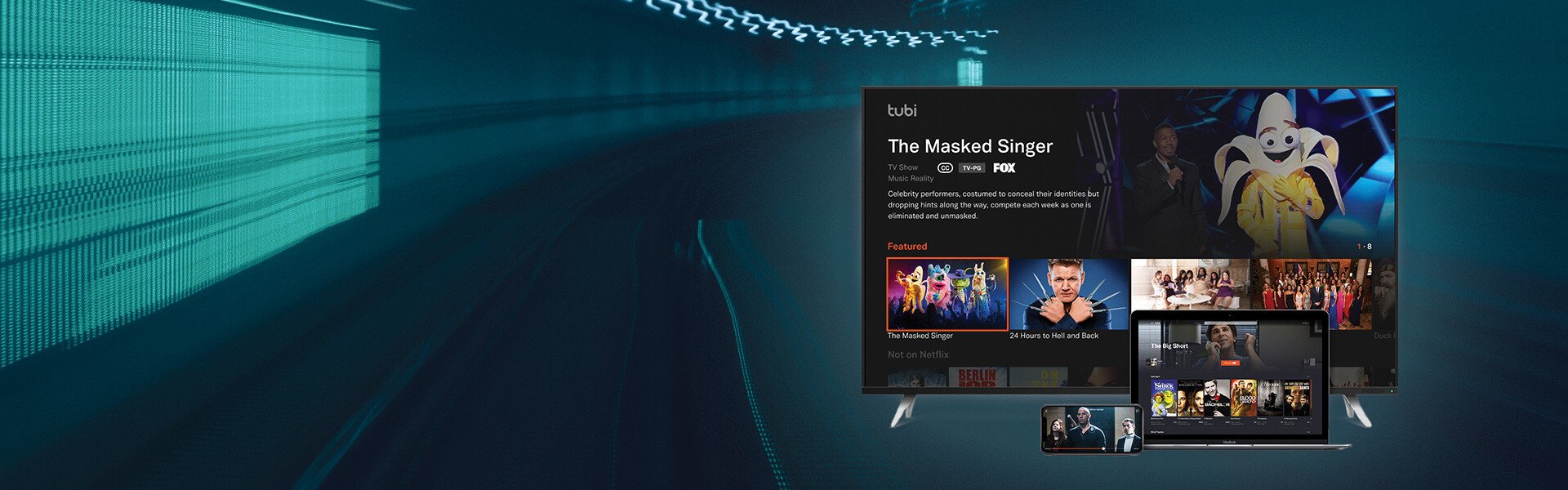
PydanticAI has no streaming engine; real-time pipelines are provisioned separately. Akka's streaming is built into the runtime — continuous, backpressured, petabyte-scale, in-memory, with no external broker — powering both agent feedback loops and high-throughput data processing (the engine behind Tubi's real-time hyper-personalization at 5 billion tokens per second).
| Buyer concern | PydanticAI | Akka |
|---|---|---|
| Certifications & audits | SOC 2 Type II, HIPAA, GDPR (Logfire observability) | 19 standards — SOC 2 II + public SOC 3, ISO 27001/42001, HIPAA, PCI DSS, GDPR, NIS2, DORA, EU AI Act, NIST AI RMF — plus annual pen tests, SBOMs, 40+ policies (trust.akka.io) |
| Scope of accountability | The framework; you integrate and operate the runtime, durability, and everything else | One platform, one SLA, 24/7 SRE — Akka owns the running system |
| Risk transfer | Standard open-source / cloud terms | Availability and data-integrity guarantees backed by contractual indemnities |
| Track record & funding model | Venture-funded: $12.5M Series A led by Sequoia (Oct 2024), ~$17.2M total; monetizes via Logfire | Profitable and self-funding; 18 years and 100,000+ deployments (52 banks); Dell Technologies Capital is largest shareholder, a customer, and an AI partner |
| Budget predictability | Python infrastructure footprint you size and operate | Fixed annual fee finance can forecast |
PydanticAI gives you a clean, type-safe way to author agents in Python. Akka gives you the platform that runs them: durable runtime, high availability, embedded governance, and an SLA Akka owns. The decision is scope and accountability — a framework you build a production system around, versus the production system.
PydanticAI — what it is: ai.pydantic.dev, pydantic.dev/pydantic-ai — model-agnostic, type-safe Python agent framework; structured outputs, dependency injection, MCP, graph workflows
PydanticAI durable execution: ai.pydantic.dev/durable_execution/overview — co-maintained integrations with Temporal, DBOS, Prefect, Restate; durability delegated to external engines
PydanticAI maturity: github.com/pydantic/pydantic-ai/releases, pypi.org/project/pydantic-ai — V1 since Sept 2025; stable 1.107.0 (June 10, 2026); V2 in beta; "Production/Stable"
Pydantic Logfire: pydantic.dev/logfire, logfire.pydantic.dev/docs/compliance — tracing and evals; SOC 2 Type II, HIPAA, GDPR, EU data region; SLA on Enterprise plan
Pydantic funding: techcrunch.com (Oct 1, 2024), crunchbase.com — $12.5M Series A led by Sequoia (Oct 2024); ~$17.2M total over two rounds
Akka trust center: trust.akka.io — 19 compliance standards; SOC 2 II + public SOC 3; annual pen tests, SBOMs, 40+ policies
Akka performance: akka.io/blog/go-slow-to-go-fast — Manulife up to 300% more concurrency, 30–50% faster; ~10T vs ~2T tokens/core; ~80% less compute than Python
Akka platform: 99.9999% availability, active-active HA/DR, sub-1 min RTO, zero byte RPO (contractual indemnities); 189 regulations / 962 controls / 574 with financial penalty; 100,000+ deployments / 18 years / 52 banks; profitable; Dell Technologies Capital