Akka vs. NVIDIA

A comparison for teams building agentic AI
NIM · NeMo · NeMo Agent toolkit · AI Enterprise · Blueprints  |  June 2026
NVIDIA's agentic stack serves and assembles AI; Akka governs and runs the agentic application above it. NIM, NeMo, the NeMo Agent toolkit, AI Enterprise, and Blueprints are an inference-and-microservice layer tied to NVIDIA GPUs and CUDA — software you self-host, assemble, and operate. Akka is the governed agentic application platform that runs on top of that serving layer, with a contractual availability SLA, durable agent state, and runtime governance.
None
Self-Hosted Uptime SLA
99.9999%
Akka Availability SLA
4ms
Akka Durable-State Reads
Mar 2025
NeMo Agent Toolkit 1.0
DimensionNVIDIA (NIM / NeMo / NeMo Agent toolkit / AI Enterprise / Blueprints)Akka
What it isAn inference + microservice-and-toolkit layer: containerized model serving, model customization, and an open-source agent library, packaged as self-hosted softwareA governed agentic application platform that runs on one runtime
LayerThe serving and assembly layer; you integrate and operate the application around itThe application layer above model serving — agents, memory, streaming, APIs, governance pre-integrated
Availability SLASupport-response SLA only (4-hour initial response, 8x5); no uptime/availability SLA — you run the software in your own infrastructure99.9999% uptime — entire platform, backed by indemnities, Akka-operated
RTO / RPOOwned by the customer; no published RTO/RPOSub-1-minute RTO; zero-byte RPO, active-active across regions
Durable agent state / memoryNot provided as managed infrastructure; customer sources and operates a state/vector storeDurable in-memory, 4ms reads / sub-10ms writes, replayable from the event journal
Agent toolkit maturityNeMo Agent toolkit: open-source library first released March 2025 (renamed from AIQ / Agent Intelligence toolkit); framework-agnostic glue for LangChain/LlamaIndex/CrewAI — not a hosted runtimeProduction runtime, 18 years, 100,000+ deployments
Governance / EU AI ActNeMo Guardrails provides content/topic rails; no inline runtime enforcement, immutable audit ledger, pre-deployment classification, or sealed postureAspect-woven runtime enforcement + full pre-production governance
Hardware couplingOptimized for and dependent on NVIDIA GPUs and CUDARuns on any hardware, any cloud, on-prem; no GPU/CUDA dependency for the application layer
Cost modelAI Enterprise at $4,500 per GPU per year (or per-GPU-per-hour cloud) for the serving layer; you provision and operate everything above itShared compute; up to 90% lower infrastructure for the same agentic workload, fixed annual fee
CertificationsAI Enterprise production-branch support, monthly CVE patching, security notifications, SBOM/VEX19 standards (SOC 2 II + public SOC 3, ISO 27001/42001, HIPAA, PCI DSS, GDPR, NIS2, DORA, EU AI Act, NIST AI RMF)

A Serving-and-Toolkit Layer, Not a Governed Application Platform

NVIDIA's agentic stack is five pieces of software the customer assembles and operates: NIM containers serve models, NeMo customizes them, the NeMo Agent toolkit wires agents together in code, Blueprints are reference samples to copy, and NVIDIA AI Enterprise is the licensed, security-maintained bundle that ships them. Each is real and well-built. Together they are a serving and assembly layer — not a governed agentic application platform with one runtime and one SLA.

CapabilityNVIDIA stackAkka
Model inference / servingYes — NIM (best in class)Not provided (calls NIM or any endpoint)
Model fine-tuning / customizationYes — NeMo CustomizerNot provided
Native agent runtime with durable executionNeMo Agent toolkit is a library you host and operateBuilt in
Durable agent memory as managed infrastructureCustomer sources and operatesBuilt in, 4ms / sub-10ms
Real-time streaming engineCustomer provisions separatelyBuilt in, backpressured, petabyte-scale
HTTP / gRPC API layerCustomer buildsBuilt in
Inline governance / policy enforcementContent rails (NeMo Guardrails) onlyInline, runtime-embedded
Pre-production governanceNoneClassification, sign-offs, sealed posture
Operated runtime with an availability SLANo — you self-host the softwareYes — Akka operates it at 99.9999%

NVIDIA serves and accelerates the model. Akka runs the application that uses it.

Availability: A Support SLA Is Not an Uptime SLA

NVIDIA AI Enterprise includes a support-response SLA — Business Standard Support with a 4-hour initial response time, 8am–5pm local business hours, plus software updates, maintenance branches, and security notifications. That is support for software you run yourself. Because you operate NIM, NeMo, and your agents in your own infrastructure, the availability of the running system is owned by the customer — there is no published uptime SLA, no RTO, and no RPO for the application. (NVIDIA's 99% Service Availability target applies only to its hosted DGX Cloud, a separate product.)

MetricNVIDIA stackAkka
Availability (uptime) SLANone — customer-owned99.9999%
Support-response SLA4-hour initial response, 8x5 (Business Standard)24/7 SRE, plus the uptime guarantee
Allowed downtime / yearCustomer-determined~31 seconds
RTOCustomer-ownedSub-1 minute
RPOCustomer-ownedZero byte
Who operates the runtimeThe customerAkka

NVIDIA guarantees how fast it answers a support ticket; Akka guarantees that the system stays up and loses no data, and backs that with contractual indemnities.

Durable State the Runtime Holds

The NVIDIA stack serves models statelessly; durable agent state — conversation memory, in-flight task state, long-running plans — is not provided as managed infrastructure. The customer selects, wires, and operates a state store and a vector database, and owns their failure modes and latency.

Akka holds durable agent state in-memory at 4ms reads / sub-10ms writes, sharded and replayable from its event journal, with no external store to provision. Akka is explicitly not a vector database or semantic knowledge layer; it is the durable execution substrate that holds the agent's working state across failures.

Cost

AI systems built with Akka are up to 90% cheaper to operate than the equivalent Python-based stack — a function of the infrastructure required to run the same agentic transaction volume, not list price. The drivers are actor concurrency (~10T tokens/core/year vs ~2T; ~80% less compute than Python frameworks; Manulife: up to 300% more concurrency, 30–50% faster processing after porting from Python), shared compute, and micro-checkpointing.

NVIDIA AI Enterprise lists at $4,500 per GPU per year (or per-GPU-per-hour cloud) for the serving layer. That is the price of the inference-and-microservice bundle; the application layer above it — agent runtime, durable memory, streaming, APIs, observability, and governance — is provisioned and operated separately. Akka delivers that layer on one shared-compute runtime at a fixed annual fee.

Governance and the EU AI Act

NeMo Guardrails provides programmable content and topic rails — keeping a model on-topic, filtering unsafe outputs. That is content moderation, not governance enforcement. The NVIDIA stack publishes no inline runtime policy enforcement, no decision explainability, no human pause/override of a running process witnessed as it happens, no immutable interaction ledger, no pre-deployment classification, and no sealed audit artifact.

The penalties are enforceable now

ViolationMaximum Fine
Prohibited AI practices (Art. 5)EUR 35M or 7% global turnover
High-risk obligations (Art. 9-15)EUR 15M or 3% global turnover

High-risk AI carries a 10-year logging-retention obligation (Art. 72).

How Akka governs

At the runtime: inline guardrails, policies, LLMs-as-a-judge, and sanitizers; hash-chained immutable evidence; HITL/HOTL control; classification against 189 regulations and 962 controls (574 carrying a financial penalty) before a system ships; multi-persona sign-offs; a sealed Governance Posture Package; and Akka Verify proving conformance from the running system. Governance the NVIDIA stack leaves to the customer, Akka enforces inline.

Two Lifecycles, One Certified System

Building on the NVIDIA stack means engineers wiring NIM endpoints, NeMo jobs, and toolkit code; there is no path for a product manager, domain expert, or risk officer to contribute, and no built-in governance lifecycle. Akka runs two independent lifecycles on one platform via Akka Specify:

Build lifecycle
Functional contract
"Rank incoming ER patients by acuity and route the top three to a clinician."
Product · developers · ML engineers · domain experts
v1.4 · versioned · tested
Govern lifecycle
Safeguard contract
"Block prohibited practices under EU AI Act Article 5; notify regulators within 24h of any incident."
Risk · security · compliance
v2.1 · versioned & tested independent of the build
Akka Specify
AI-assisted authoring
generates · tests · runs
One certified AI service
Built, governed, and running
  • Agents, tools, orchestration, memory, APIs, streaming, UI
  • Guardrails, sanitizers, HITL/HOTL, evaluations, halts
  • Interaction, evidence, and causal logging
Akka Verify ↻ validates the running system against both specs and fine-tunes the AI from production data.

The build lifecycle and the governance lifecycle are versioned and tested independently, by different audiences — an audience and a workflow the NVIDIA stack has no equivalent for.

Real-Time Streaming at Petabyte Scale

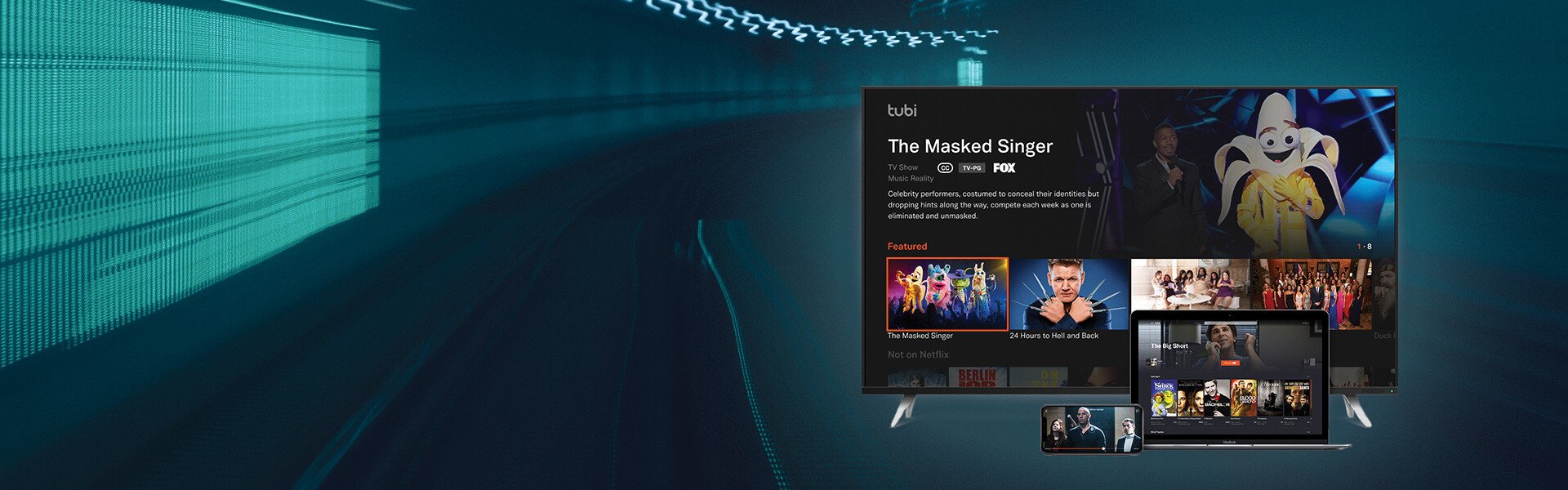
The NVIDIA stack has no application streaming engine; real-time agent feedback loops and high-throughput pipelines are provisioned separately. Akka's streaming is built into the runtime — continuous, backpressured, petabyte-scale, in-memory, with no external broker — powering both agent feedback loops and high-throughput data processing (the engine behind Tubi's real-time hyper-personalization at 5 billion tokens per second).

For the Buyer: Maturity, Hardware, and Accountability

Buyer concernNVIDIA stackAkka
Agent-platform maturityNeMo Agent toolkit first released March 2025 (renamed from AIQ / Agent Intelligence toolkit), ~15 months old; a framework-agnostic glue layer over LangChain, LlamaIndex, and CrewAI — code-level instrumentation, not a hosted runtimeA production runtime: 18 years, 100,000+ deployments, 52 banks; 2 billion+ people touch an Akka-powered app daily
Hardware / cloud lock-inOptimized for and dependent on NVIDIA GPUs and CUDARuns on any hardware, any cloud, on-prem, or sovereign cloud; portable specs, no GPU/CUDA dependency for the application layer
Scope of accountabilityThe serving layer; you integrate and operate the application, and own its uptimeOne platform, one SLA, 24/7 SRE — Akka owns the running system
Risk transferSoftware support entitlements; availability is customer-ownedAvailability and data-integrity guarantees backed by contractual indemnities
Certifications & auditsAI Enterprise production-branch support, monthly CVE patching, security notifications, SBOM/VEX19 standards — SOC 2 II + public SOC 3, ISO 27001/42001, HIPAA, PCI DSS, GDPR, NIS2, DORA, EU AI Act, NIST AI RMF — plus annual pen tests, SBOMs, 40+ policies (trust.akka.io)
Budget predictabilityPer-GPU licensing plus separately provisioned application infrastructureFixed annual fee finance can forecast

The NVIDIA agent-toolkit story is recent and code-level; its product maturity as an application platform is early, even though NVIDIA's serving products are mature and dominant. The decision is altitude and accountability: NVIDIA gives you the best serving layer to build an application around; Akka gives you the governed application platform that runs above it.

Akka Complements NVIDIA Inference

This is not a replacement story for inference. NVIDIA is the leading model-serving and acceleration layer, and Akka is not model serving, inference, RL, or a GPU runtime. An Akka agentic application can call NIM endpoints, use NeMo-customized models, and run on NVIDIA GPUs for the model tier — while Akka provides the governed application layer above it: native agents, durable state, streaming, APIs, the availability SLA, and runtime governance. The two fit together; they do not compete.

Customers Running Agentic and Real-Time Systems on Akka

Manulife
2,000
developers across 100 projects on one governed platform
Tubi
5B tok/s
real-time hyper-personalization engine
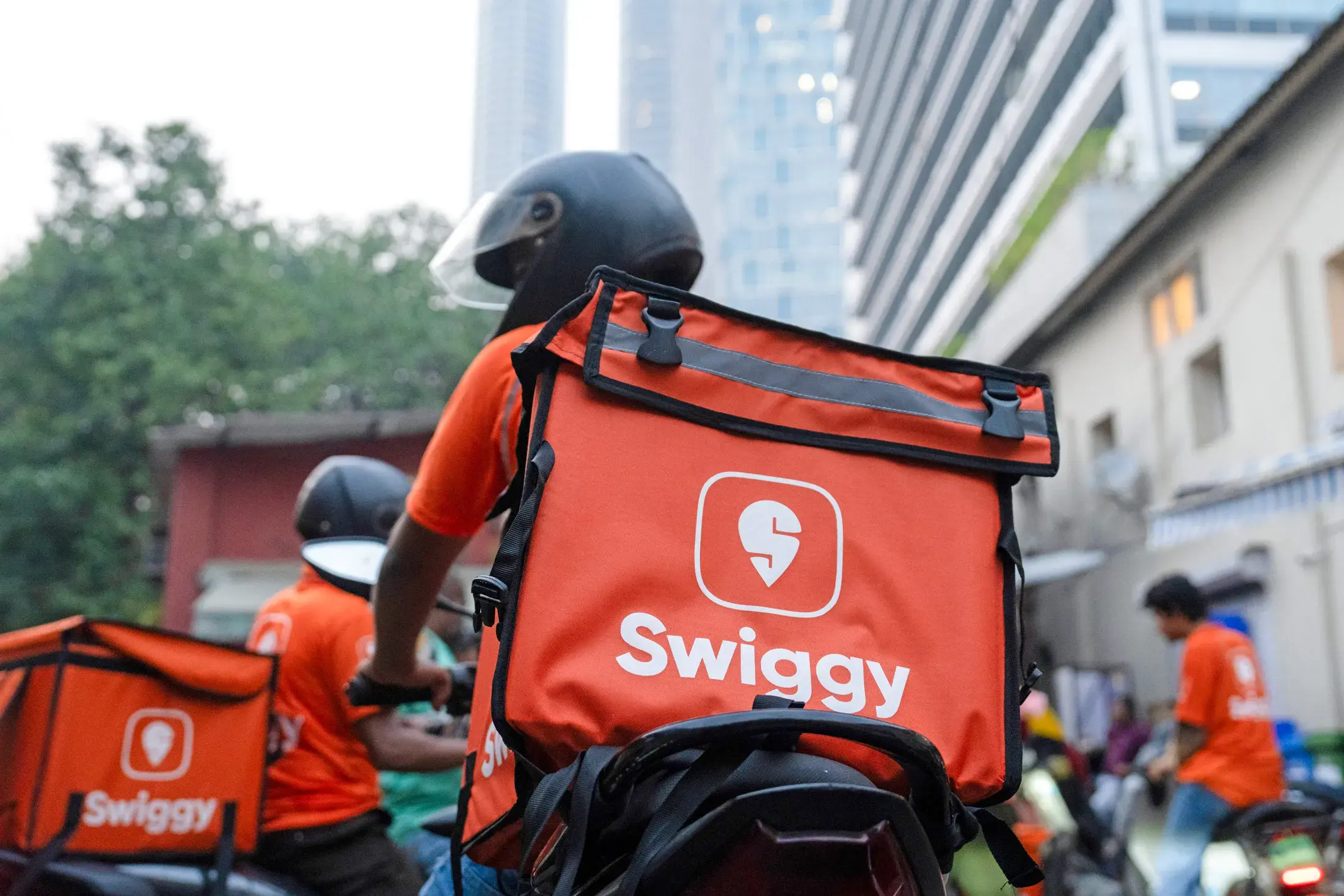
Swiggy
71ms
order-assignment AI, ~50% latency reduction
John Deere
1,000+
tractor sensors turned into real-time insight
Verizon
750%
order-processing capacity gain; 6s → 2.4s response

Common Questions

We already run NVIDIA NIM and AI Enterprise. Why add Akka?
NIM and AI Enterprise are an excellent serving layer, and Akka runs above them. NIM serves the model; Akka runs the agentic application that uses it — native agents, durable memory, streaming, APIs, an operated 99.9999% availability SLA, and runtime governance. Akka calls your NIM endpoints rather than replacing them.
Isn't the NeMo Agent toolkit NVIDIA's agent platform?
The NeMo Agent toolkit is an open-source library, first released in March 2025 (renamed from the Agent Intelligence toolkit / AIQ), for connecting and profiling teams of agents across frameworks like LangChain, LlamaIndex, and CrewAI. It is code-level instrumentation you host and operate, not a hosted runtime with an availability SLA, durable state, HA/DR, or governance enforcement. Akka is the governed runtime; the toolkit can sit inside an application Akka runs.
Does NVIDIA AI Enterprise give us an uptime SLA?
AI Enterprise includes a support-response SLA — a 4-hour initial response, 8x5, plus security patches and maintenance branches. It does not include an availability or uptime SLA, because you run the software in your own infrastructure; the running system's uptime, RTO, and RPO are owned by the customer. Akka operates the runtime and guarantees 99.9999% availability with sub-1-minute RTO and zero-byte RPO.
Can we add governance on top of the NVIDIA stack?
NeMo Guardrails gives you content and topic rails. The EU AI Act expects more: enforcement inline to the runtime, immutable records witnessed as they happen, human override on running processes, pre-deployment classification, and a sealed audit artifact. Akka embeds all of this — classification against 189 regulations and 962 controls before a system ships — rather than leaving it to the customer to assemble.

Sources

NVIDIA NIM: nvidia.com/en-us/ai-data-science/products/nim-microservices; developer.nvidia.com/nim — containerized GPU-accelerated inference microservices (TensorRT-LLM / vLLM / SGLang; OpenAI-compatible API); part of AI Enterprise; CUDA compute capability > 7.0 required
NVIDIA NeMo: nvidia.com/en-us/ai-data-science/products/nemo; developer.nvidia.com/blog/simplify-custom-generative-ai-development-with-nvidia-nemo-microservices — open-source generative-AI framework; microservices: Customizer, Evaluator, Guardrails, Retriever, Curator (built on CUDA-X)
NeMo Agent toolkit: github.com/NVIDIA/NeMo-Agent-Toolkit; developer.nvidia.com/nemo-agent-toolkit — open-source library, Apache-2.0 ("AS IS, WITHOUT WARRANTIES"); framework-agnostic (LangChain, LlamaIndex, CrewAI, Semantic Kernel, Google ADK); first release v1.0.0 March 2025
NeMo Agent toolkit history: forums.developer.nvidia.com/t/335881; infoworld.com/article/3851326 — renamed from Agent Intelligence toolkit / AIQ; launched March/April 2025
NVIDIA Blueprints: blogs.nvidia.com/blog/nim-agent-blueprints; nvidianews.nvidia.com (NIM Agent Blueprints launch) — reference AI workflows: sample apps + reference code + Helm charts; deployed in production via AI Enterprise
NVIDIA AI Enterprise pricing & support: docs.nvidia.com/ai-enterprise/planning-resource/licensing-guide/latest/pricing.html; dell.com SKU ac566091 ($4,500/GPU/year, includes Standard 8x5 support; also per-GPU-per-hour cloud); nvidia.com/en-us/support/enterprise (Business Standard: 4-business-hour Sev-1 response) — support-response SLA, not an uptime SLA; 99% target applies only to hosted DGX Cloud
NVIDIA AI Enterprise lifecycle/security: docs.nvidia.com/ai-enterprise/lifecycle/latest/choosing-a-branch.html — production branch, monthly CVE patches, SBOM/VEX, container/model signing
Akka platform, governance, trust & performance: per akka-facts.md — trust.akka.io; akka.io/blog/go-slow-to-go-fast; 99.9999% availability, sub-1-min RTO, zero-byte RPO (contractual indemnities); 4ms / sub-10ms state; 189 regulations / 962 controls / 574 with financial penalty; 100,000+ deployments / 18 years; profitable; Dell Technologies Capital

NVIDIA claims are drawn from NVIDIA's own documentation, blog, and newsroom, and NVIDIA AI Enterprise licensing material. Akka claims reflect Akka's published capabilities. NVIDIA is the leading model-serving and inference layer; Akka operates as the governed application platform above it and does not provide inference or model serving. · June 2026