| Dimension | Gemini Enterprise Agent Platform | Akka |
|---|---|---|
| What it is | A rebrand of Vertex AI (Cloud Next 2026): a set of Google Cloud services — ADK, Agent Studio, Agent Engine, Agent/Model Garden — for building agents | A full-stack agentic systems platform |
| Scope | Build tools plus a managed agent runtime; memory, governance enforcement, and the API/streaming tier are assembled from separate Google Cloud services | Orchestration, agents, memory, streaming, APIs, observability, and governance on one runtime |
| Availability SLA | 99.9% online inference (custom models on 2+ nodes); 99.5% Pipelines; the Agent Runtime is excluded from the SLA | 99.9999% — entire platform, backed by indemnities |
| RTO / RPO | Per underlying Google Cloud service; customer-architected across regions | Sub-1-minute RTO; zero-byte RPO; active-active |
| Naming / churn | Renamed repeatedly: Enterprise Search → Generative AI App Builder → Vertex AI Search & Conversation → AI Applications → Agent Builder → Gemini Enterprise Agent Platform | Stable platform; 18 years; 100,000+ deployments |
| Governance / EU AI Act | Infrastructure governance: IAM, VPC-SC, CMEK, DLP, audit logs, data residency — no inline AI-policy enforcement, classification, or sealed audit artifact | Aspect-woven runtime enforcement + full pre-production governance |
| Lock-in | Google Cloud IAM identity, GCP-project data residency, models served through GCP | Akka cloud, any hyperscaler VPC, own Kubernetes, on-prem, or sovereign cloud; portable specs |
| Cost model | Pay-as-you-go: $0.0864/vCPU-hour + $0.0090/GB-hour runtime, $0.25 per 1,000 stored memories, per-token model calls, per-query search | Shared compute; up to 90% lower infrastructure for the same workload; fixed annual fee |
| Certifications | Google Cloud compliance program | 19 standards (SOC 2 II + public SOC 3, ISO 27001/42001, HIPAA, PCI DSS, GDPR, NIS2, DORA, EU AI Act, NIST AI RMF) |
The Gemini Enterprise Agent Platform is the new name for Vertex AI, announced at Google Cloud Next 2026 on April 22, 2026. It gives you three ways to build an agent — the code-first Agent Development Kit (ADK), the low-code Agent Studio canvas, and prebuilt templates in Agent Garden — plus a managed Agent Engine runtime and a Model Garden of 200+ models (Gemini and Anthropic Claude among them). Each is a separate Google Cloud service the customer wires together and operates; the platform unifies the console and namespace, not the runtime.
| Capability | Gemini Enterprise Agent Platform | Akka |
|---|---|---|
| Agent build tools | ADK + Agent Studio + Agent Garden | Built in |
| Managed agent runtime | Agent Engine — excluded from the SLA | Built in, covered by the platform SLA |
| Durable memory | Memory Bank, metered per stored memory | Built in, 4ms / sub-10ms |
| Real-time streaming | Provisioned from separate Google Cloud services | Built in, backpressured, petabyte-scale |
| Governance / policy enforcement | Infrastructure controls; no inline AI-policy enforcement | Inline, runtime-embedded |
| Pre-production governance | None | Classification, sign-offs, sealed posture |
Akka delivers all of it as one runtime with one SLA. The customer does not integrate or operate the seams between an orchestration kit, a memory store, a streaming tier, and a governance stack.
The product the customer would standardize on has been renamed repeatedly: Enterprise Search → Generative AI App Builder → Vertex AI Search & Conversation → AI Applications → Agent Builder → and now, at Cloud Next 2026, the Gemini Enterprise Agent Platform. The rebrand is additive — existing Vertex AI workloads run unchanged under the new namespace, and SDKs, billing, and APIs were migrated with no breaking changes. But the churn is real and recent: the vertexai.generative_models Python SDK was deprecated June 24, 2025, with removal scheduled for June 24, 2026 — a live migration deadline. Akka has been one stable platform across 18 years and 100,000+ production deployments; the name on the contract has not changed under the customer.
Google Cloud publishes a 99.9% monthly-uptime SLA for online inference — and only for custom models deployed across 2 or more nodes, which the customer must architect and pay for. Vertex Pipelines carry 99.5% and the training-cluster control plane 99%. Most consequentially for agents: the Agent Runtime (Agent Engine) is explicitly excluded from the SLA, as are user-defined agents created in the Gemini Enterprise environment. Akka publishes a 99.9999% availability SLA across the entire platform — agents, memory, streaming, and governance — with sub-1-minute RTO, zero-byte RPO, active-active across regions, and contractual indemnities.
| Metric | Gemini Enterprise Agent Platform | Akka |
|---|---|---|
| Availability SLA | 99.9% online inference (2+ nodes) | 99.9999% |
| Allowed downtime / year | ~8.8 hours | ~31 seconds |
| Agent runtime SLA | Excluded from the SLA | Covered |
| RTO / RPO | Per underlying service; customer-architected | Sub-1-minute / zero-byte |
| SLA scope | Individual Google Cloud services | The entire platform |
AI systems built with Akka are up to 90% cheaper to operate than Python-based systems — a function of the infrastructure required for the same agentic transaction volume, not list price. The Gemini Enterprise Agent Platform bills pay-as-you-go on meters that scale with load: the Agent Engine runtime at $0.0864 per vCPU-hour and $0.0090 per GB-hour, stored sessions and memories at $0.25 per 1,000, model calls per token, and search at $1.50 per 1,000 queries — with per-seat subscriptions on the agent app layer on top.
Akka runs orchestration, agents, memory, streaming, APIs, observability, and governance on one shared-compute runtime. The efficiency comes from actor concurrency (~10T tokens/core/year vs ~2T; ~80% less compute than Python frameworks; Manulife: up to 300% more concurrency, 30–50% faster processing after porting from Python), shared compute, and micro-checkpointing. The spend is a predictable fixed annual fee, not meters that move with usage.
The platform is bound to Google Cloud. Identity runs through Google Cloud IAM (or a federated IdP into it); data residency is scoped to a Google Cloud project and region (DRZ); and the Model Garden's models are served through GCP. Portability across this stack is the customer's project.
Akka deploys on Akka cloud, any hyperscaler VPC (AWS / Azure / GCP), the customer's own Kubernetes, on-prem, or a sovereign cloud with country-isolated data, networking, and local SREs — from one portable spec. The platform you standardize on is not the platform you are confined to.
The Gemini Enterprise Agent Platform provides strong infrastructure governance: Google Cloud IAM, VPC Service Controls, Customer-Managed Encryption Keys, Data Loss Prevention, Access Transparency, audit logging, and data residency. These secure the perimeter and the data. They do not enforce AI policy inline: no real-time guardrail/policy/judge layer woven into the runtime, no decision explainability, no human pause/override of a running agent as a platform primitive, no immutable interaction ledger, no pre-deployment classification against a regulatory corpus, and no sealed audit artifact.
| Violation | Maximum Fine |
|---|---|
| Prohibited AI practices (Art. 5) | EUR 35M or 7% global turnover |
| High-risk obligations (Art. 9-15) | EUR 15M or 3% global turnover |
High-risk AI carries a 10-year logging-retention obligation (Art. 72).
At the runtime: inline guardrails, policies, LLMs-as-a-judge, and sanitizers; hash-chained immutable evidence; HITL/HOTL control; classification against 189 regulations and 962 controls (574 carrying a financial penalty) before a system ships; multi-persona sign-offs; a sealed Governance Posture Package; and Akka Verify proving conformance from the running system. Governance the customer would otherwise assemble around Google Cloud's infrastructure controls, Akka enforces inline.
Building on the Gemini Enterprise Agent Platform means engineers in ADK or builders in Agent Studio producing agent logic; governance is a set of infrastructure controls a separate team configures around them, after the fact. Akka runs two independent lifecycles on one platform via Akka Specify:
The build lifecycle and the governance lifecycle are versioned and tested independently, by different audiences — a workflow the Gemini Enterprise Agent Platform has no equivalent for.
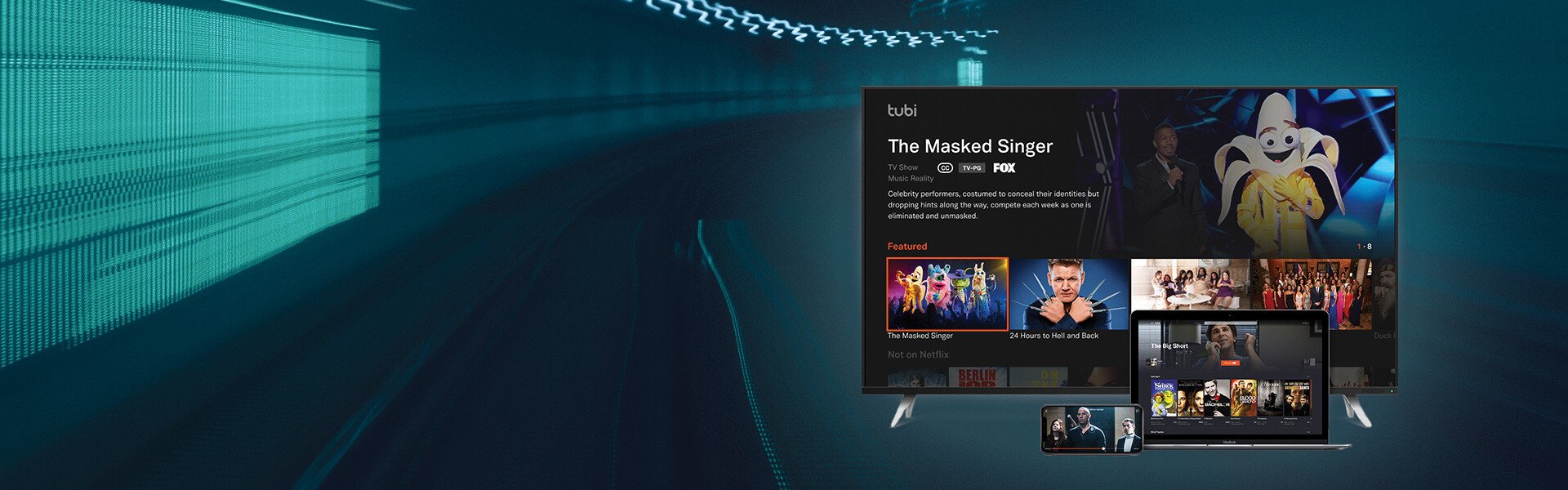
The Gemini Enterprise Agent Platform has no streaming engine; real-time pipelines are provisioned from separate Google Cloud services and wired to the agents. Akka's streaming is built into the runtime — continuous, backpressured, petabyte-scale, in-memory, with no external broker — powering both agent feedback loops and high-throughput data processing (the engine behind Tubi's real-time hyper-personalization at 5 billion tokens per second).
Google Cloud is durable; that is not the question. The question is the product's maturity and the integration burden it puts on the buyer.
| Buyer concern | Gemini Enterprise Agent Platform | Akka |
|---|---|---|
| Product maturity | Rebranded at Cloud Next 2026 (April); GA core, with agent components actively evolving; the prior SDK is being removed June 2026 | Stable platform; 18 years; 100,000+ deployments (52 banks) |
| Naming / churn | Renamed five times (Enterprise Search → Agent Builder → Gemini Enterprise Agent Platform) | One platform, one name under the customer |
| Scope of accountability | The buyer integrates and operates ADK, Agent Engine, memory, streaming, and governance as separate Google Cloud services | One platform, one SLA, 24/7 SRE — Akka owns the running system |
| Availability commitment | 99.9% inference; Agent Runtime excluded from the SLA | 99.9999% across the platform, with indemnities |
| Portability / lock-in | Google Cloud IAM identity, GCP-project data, models served through GCP | Akka cloud, any hyperscaler VPC, own Kubernetes, on-prem, or sovereign cloud; portable specs |
| Certifications & audits | Google Cloud compliance program | 19 standards — SOC 2 II + public SOC 3, ISO 27001/42001, HIPAA, PCI DSS, GDPR, NIS2, DORA, EU AI Act, NIST AI RMF — plus annual pen tests, SBOMs, 40+ policies (trust.akka.io) |
| Budget predictability | Pay-as-you-go meters that scale with load | Fixed annual fee finance can forecast |
The decision is scope, accountability, and portability: the Gemini Enterprise Agent Platform gives the buyer a strong set of Google Cloud building blocks to assemble inside Google Cloud; Akka gives the buyer one governed platform, with one SLA, that runs anywhere.
Rebrand / Cloud Next 2026: cloud.google.com/blog/products/ai-machine-learning/introducing-gemini-enterprise-agent-platform — Vertex AI rebranded April 22, 2026; existing workloads run unchanged
Components: docs.cloud.google.com/gemini-enterprise-agent-platform/overview, /agent-studio/design-agents, /build/runtime; cloud.google.com/model-garden — ADK, Agent Studio, Agent Engine, Agent/Model Garden; 200+ models incl. Gemini and Anthropic Claude
Availability SLA: cloud.google.com/vertex-ai/sla, /vertex-ai/generative-ai/sla — 99.9% online inference (custom models on 2+ nodes), 99.5% Pipelines, 99% training control plane
Agent runtime SLA exclusion: cloud.google.com/terms/gemini-enterprise/sla — SLA does not apply to user-defined agents or to agents via Agent Runtime on the Gemini Enterprise Agent Platform
Pricing (pay-as-you-go): cloud.google.com/vertex-ai/pricing — Agent Engine $0.0864/vCPU-hour + $0.0090/GB-hour; $0.25 per 1,000 stored memories; Vertex AI Search $1.50 per 1,000 queries
Naming churn / SDK deprecation: docs.cloud.google.com/vertex-ai/generative-ai/docs/release-notes — vertexai.generative_models deprecated June 24 2025, removal June 24 2026; prior names incl. Enterprise Search, Generative AI App Builder, Agent Builder
Governance / lock-in: docs.cloud.google.com/gemini-enterprise-agent-platform/machine-learning/general/vpc-service-controls; /build/runtime — IAM, VPC-SC, CMEK, DLP, Access Transparency, audit logging, data residency (DRZ)
Akka trust center: trust.akka.io — 19 compliance standards; SOC 2 II + public SOC 3; annual pen tests, SBOMs, 40+ policies
Akka performance: akka.io/blog/go-slow-to-go-fast — Manulife up to 300% more concurrency, 30–50% faster; ~10T vs ~2T tokens/core; ~80% less compute than Python
Akka platform: 99.9999% availability, active-active HA/DR, sub-1 min RTO, zero byte RPO (contractual indemnities); 189 regulations / 962 controls / 574 with a financial penalty; 100,000+ deployments / 18 years; profitable; Dell Technologies Capital