| Dimension | Azure AI Foundry (Microsoft Foundry) | Akka |
|---|---|---|
| What it is | An agent service orchestrating a set of separately provisioned Azure services | A full-stack agentic systems platform on one runtime |
| Scope | Agent runtime + bring-your-own Cosmos DB, AI Search, Storage, Key Vault, OpenAI, API Management, Monitor — integrated and operated by you | Agents, memory, streaming, APIs, orchestration, observability, and governance on one runtime |
| Availability SLA | No SLA on Agent Service availability or state durability | 99.9999% — entire platform, backed by indemnities |
| HA / DR | No automatic failover; no built-in DR; no active-active multi-region replication | Active-active HA/DR; sub-1-min RTO; zero-byte RPO |
| Recovery point | "Can be total loss"; cross-region state lost on failback | Zero-byte RPO; state fully preserved |
| Governance / EU AI Act | Assessment & mapping across Purview, Content Safety, API Management, Monitor, Entra — not inline enforcement | Aspect-woven runtime enforcement + full pre-production governance |
| Portability | Azure identity, gateway, and data services; moving off means rebuilding | Any cloud, on-prem, or Akka cloud; portable specs; sovereign cloud |
| Cost model | Per-token / PTU OpenAI + per-RU Cosmos + per-tier AI Search + gateway + per-GB logging | Shared compute; up to 90% lower infrastructure; fixed annual fee |
| Certifications | Inherited Azure certifications + Purview Compliance Manager templates | 19 standards (SOC 2 II + public SOC 3, ISO 27001/42001, HIPAA, PCI DSS, GDPR, NIS2, DORA, EU AI Act, NIST AI RMF) |
A production agent on Azure AI Foundry is assembled from multiple, separately provisioned, separately billed Azure services. In the Agent Service Standard deployment mode, Microsoft's own setup documentation requires the customer to bring and operate an Azure Cosmos DB account (minimum 3,000 RU/s), an Azure AI Search resource, an Azure Storage account, and an Azure Key Vault — and a realistic production agent also needs Azure OpenAI, an API Management gateway, and Azure Monitor / Application Insights. (Standard agent setup)
| Azure service | Role in an agent | What the customer owns |
|---|---|---|
| Azure OpenAI | Model inference | Per-token billing or PTU capacity reservation |
| Azure Cosmos DB | Agent state / thread memory | Per-RU billing; ≥3,000 RU/s; backup, replication, failover |
| Azure AI Search | Vector store / retrieval | Per-tier billing; index rebuild on recovery |
| Azure Storage | Uploaded files, attachments | Redundancy and failover configuration |
| Azure API Management | Generative AI gateway, load balancing, circuit breaker | Multi-region gateway deployment and policy |
| Azure Monitor / App Insights | Observability | Per-GB ingestion; multi-region instances |
Microsoft's documentation is explicit that the customer operates durability: "Microsoft and you jointly operate the Foundry Agent Service… You own the durability of stateful dependencies (Azure Cosmos DB, Azure AI Search, Azure Storage)." (HA/DR for Foundry) The integration, the reliability, and the recovery across these seams are the customer's responsibility. Akka delivers agents, durable memory (4ms reads / sub-10ms writes), real-time streaming, an API layer, orchestration, observability, and governance on one runtime — provisioned once, operated as one system, under one SLA.
This is stated in Microsoft's own current documentation (HA/DR pages last updated April–May 2026):
| Metric | Azure AI Foundry Agent Service | Akka |
|---|---|---|
| Availability SLA | No SLA (availability or state durability) | 99.9999% |
| HA/DR mode | Warm-standby reconstruction; no automatic failover | Active-active, automatic |
| RTO | "30 or more minutes per project" | Sub-1 minute |
| RPO | "Can be total loss" | Zero byte |
| Multi-region | "No supported method for active-active" | Active-active across regions |
| State on failover | "Standby-region state is permanently lost" | Fully preserved |
Microsoft documents that recovery on Azure is reconstruction, not failover: "Warm standby environments start mostly empty. Recovery is reconstruction, not promotion of a hot replica," and recovered agents "have no access to prior threads," with "no state… transferable between regions." (Platform outage recovery)
A regional event is not a tail risk for an agent with no availability SLA and a "total loss" recovery point. Oct 29, 2025 — an Azure Front Door global configuration fault broke routing and authentication across Azure-fronted services for hours. May 29, 2026 — Azure OpenAI Service had a multi-region outage (failures, timeouts, 5XX) with pronounced impact across Europe and Australia East, from retry amplification cascading across regions. (Azure status history)
AI systems built on Akka are up to 90% cheaper to operate than Python-based systems — a function of the infrastructure required to run the same agentic transaction volume, not list price. On Azure AI Foundry, cost is the sum of independent meters: per-token or PTU-reserved OpenAI, per-RU Cosmos DB (≥3,000 RU/s minimum), per-tier AI Search, gateway units, and per-GB log ingestion.
PTU reservations carry a substantial monthly floor; independent 2026 pricing analyses put a single minimum PTU reservation in the low thousands of dollars per month before the surrounding services are counted (CloudZero). Each meter scales independently, making the total bill hard to forecast.
Akka runs orchestration, agents, memory, streaming, APIs, observability, and governance on shared compute under a fixed annual fee. The efficiency is structural: actor-based concurrency delivers ~10 trillion tokens per core per year versus ~2 trillion for comparable solutions, and ~80% less compute than Python-based frameworks. Manulife reported up to 300% more concurrency and 30–50% faster processing after porting Python-based systems to Akka. (akka.io/blog/go-slow-to-go-fast)
| Violation | Maximum Fine |
|---|---|
| Prohibited AI practices (Art. 5) | EUR 35M or 7% global turnover |
| High-risk obligations (Art. 9-15) | EUR 15M or 3% global turnover |
| Supplying incorrect information | EUR 7.5M or 1.5% global turnover |
Prohibited-practice penalties enforceable since Feb 2025, high-risk since Aug 2025; high-risk AI carries a 10-year logging-retention obligation (Art. 72).
Microsoft has real assessment tooling: Purview Compliance Manager ingests the EU AI Act, extracts controls with AI, maps improvement actions, and syncs Foundry evaluation results. (Purview + Foundry) That assesses and documents. The line is architectural: it observes, scores, and maps across several services — it is not a single enforcement plane woven into the agent's execution.
| Requirement | Azure approach — the gap |
|---|---|
| Real-time policy enforcement | Content Safety + API Management; multiple points, not a unified inline engine |
| Decision explainability | Post-hoc evaluations, not an inline record of a running decision |
| Immutable interaction log | Standard Monitor/Purview logs, not a hash-chained ledger |
| Human pause / override | Not built in; a log reader cannot stop a running process |
| Authorization capture | Correlate Entra + RBAC + gateway logs, not captured atomically |
| PII scrub with explain | Detection exists; no single atomic scrub-and-explain |
| Pre-deployment classification + sign-off | Compliance Manager checklists, not a runtime-gating attestation engine |
| Sealed audit artifact | Assembled from reports; no per-deployment sealed package |
Akka's governance is aspect-woven into the runtime: inline guardrails, policies, LLMs-as-a-judge, and sanitizers execute within the agents; evidence is hash-chained and immutable; humans can pause, override, or nudge a running process; PII is scrubbed and explained atomically. Before a system ships, Akka classifies it against 189 regulations and 962 controls (574 carrying financial penalties), routes change events to the right reviewers, and emits a sealed Governance Posture Package. Akka Verify proves conformance from the running system.
Building on Azure AI Foundry means developers assembling agents against Azure SDKs and portals; there is no first-class lifecycle for a risk officer to author and independently version the safeguard contract. Akka runs two independent lifecycles on one platform via Akka Specify:
The build lifecycle and the governance lifecycle are versioned and tested independently, by different audiences. Azure AI Foundry has no equivalent governance authoring lifecycle that produces a certified, sealed system.
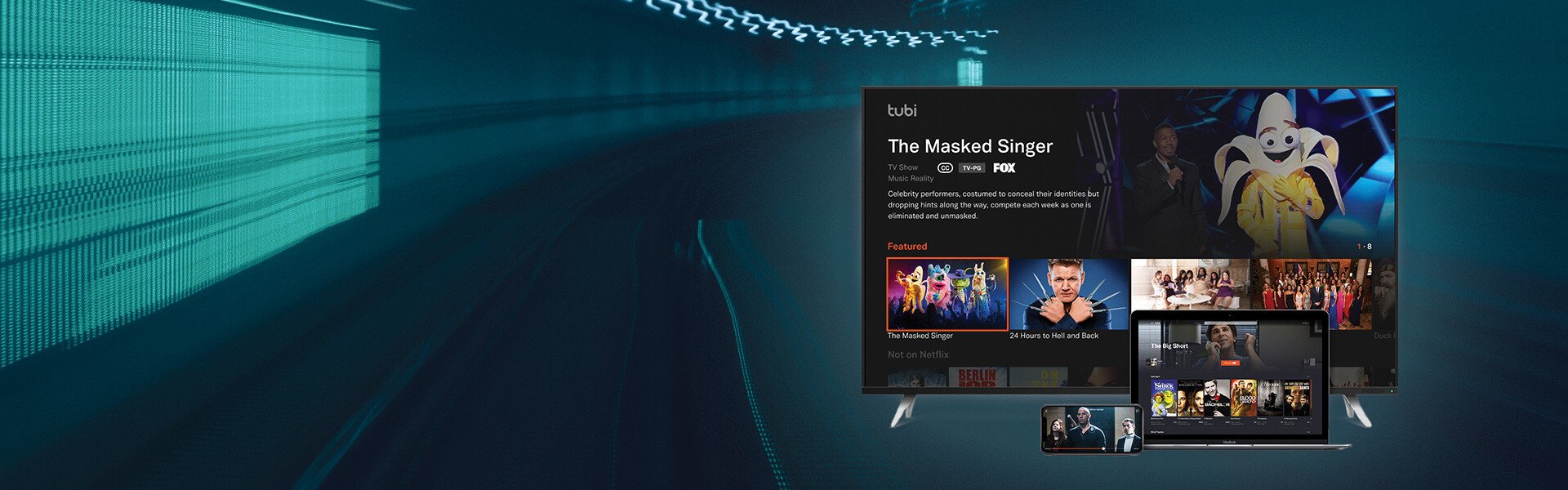
Azure AI Foundry has no built-in streaming engine; real-time pipelines are provisioned separately and operated by the customer. Akka's streaming is built into the runtime — continuous, backpressured, petabyte-scale, in-memory, with no external broker — powering both agent feedback loops and high-throughput data processing (the engine behind Tubi's real-time hyper-personalization at 5 billion tokens per second).
Microsoft is a durable company; the question is the maturity of the product. Foundry Agent Service reached general availability at Build in May 2025, and the product is mid-rebrand from "Azure AI Foundry" to "Microsoft Foundry," with RBAC roles renamed from "Azure AI User/Owner/Project Manager" to "Foundry User/Owner/Project Manager" as the change rolls out. (HA/DR for Foundry) It is a young, evolving agent layer assembled over a set of Azure services — and that layer ships today with no availability or state-durability SLA.
| Buyer concern | Azure AI Foundry | Akka |
|---|---|---|
| Product maturity | GA May 2025; active rebrand (Azure AI Foundry → Microsoft Foundry) and RBAC rename in progress | 18 years; 100,000+ production deployments; 52 banks; 2B+ people reached daily |
| Scope of accountability | Customer integrates and operates Cosmos DB, AI Search, Storage, gateway, OpenAI; Agent Service has no SLA | One platform, one SLA, 24/7 SRE — Akka owns the running system |
| Risk transfer | Standard Azure terms; no Agent Service availability/durability SLA | Availability and data-integrity guarantees backed by contractual indemnities |
| HA / DR | No automatic failover; "total loss" recovery point | Active-active; sub-1-min RTO; zero-byte RPO |
| Certifications & audits | Inherited Azure certifications + Purview Compliance Manager templates | 19 standards — SOC 2 II + public SOC 3, ISO 27001/42001, HIPAA, PCI DSS, GDPR, NIS2, DORA, EU AI Act, NIST AI RMF — plus annual pen tests, SBOMs, 40+ policies (trust.akka.io) |
| Budget predictability | Several independent meters that scale with load | Fixed annual fee on shared compute |
The decision is scope and accountability: Azure AI Foundry gives you an agent service to wire your Azure estate around; Akka gives you the integrated platform with the SLA on the whole thing.
Foundry HA/DR (no SLA, no failover): learn.microsoft.com/en-us/azure/foundry/how-to/high-availability-resiliency (updated 2026-04-15) — "Agent Service has no availability or state durability SLA"; "Foundry itself doesn't provide automatic failover or disaster recovery"; customer owns durability of Cosmos DB / AI Search / Storage
Foundry Agent Service DR: learn.microsoft.com/en-us/azure/foundry/how-to/agent-service-disaster-recovery (updated 2026-05-12) — "doesn't replicate state, create backups, or support point-in-time restore"; "no supported method for active-active, multi-region replication"; "recovery point for stateful content can be total loss"
Foundry platform outage recovery: learn.microsoft.com/en-us/azure/foundry/how-to/agent-service-platform-disaster-recovery — RTO "30 or more minutes per project"; "reconstruction, not promotion of a hot replica"; "standby-region state is permanently lost"
Standard agent setup (required services): learn.microsoft.com/en-us/azure/foundry/agents/concepts/standard-agent-setup — Cosmos DB (≥3,000 RU/s), AI Search, Storage, Key Vault required; plus OpenAI, API Management, Monitor
Foundry Agent Service GA: techcommunity.microsoft.com — GA announced at Build, May 2025
Purview + Foundry governance: learn.microsoft.com/en-us/purview/ai-azure-foundry — Compliance Manager extracts EU AI Act controls, maps improvement actions, syncs Foundry evaluations (assessment/mapping)
Azure OpenAI / PTU pricing (third-party): cloudzero.com/blog/azure-openai-pricing; opslyft.com/blog/azure-openai-pricing — PTU minimum reservations and multi-meter cost
Azure outages: azure.status.microsoft/en-us/status/history — Oct 29 2025 Front Door global fault; May 29 2026 Azure OpenAI multi-region outage (Europe / Australia East)
Akka performance: akka.io/blog/go-slow-to-go-fast — Manulife up to 300% more concurrency, 30–50% faster; ~10T vs ~2T tokens/core; ~80% less compute than Python
Akka platform: 99.9999% availability, active-active HA/DR, sub-1-min RTO, zero-byte RPO (contractual indemnities); 189 regulations / 962 controls / 574 with penalties; 100,000+ deployments / 18 years; profitable; Dell Technologies Capital
Akka trust center: trust.akka.io — 19 compliance standards; SOC 2 II + public SOC 3; annual pen tests, SBOMs, 40+ policies
Manulife: akka.io/blog/manulife-selects-akka-to-operationalize-agentic-ai (March 10, 2026)